Solar Intake Ridge
The highest collection layer, where mirrors, solar faces, radiant rails, and tracking platforms gather light without letting brightness become arrogance.
Open Solar Intake
Energy made visible. Power turned to beauty, spectacle, heat, status, and responsibility.
Head Radiant Monitoring View
Solar intake high, output stable.
Redistribution active, no overload.
Emergency margins preserved.
Public output cleared for display.

Skyward District occupies the highest sun-exposed ridges of Tethys, where solar intake, heat routing, public spectacle, elite housing, and radiant civic authority all meet. It is not simply the beautiful district. It is the place where power becomes visible enough for the city to trust it, question it, celebrate it, and fear it when limits are ignored.
“Beauty is not wasteful when it reminds people the system is still holding.”
Apollo Serpentine, Head RadiantMirrors, radiant rails, and collection arrays gather light without pretending sunlight is harmless abundance.
Thermal load is staged, shifted, and handed off before glamour becomes stress on Tethys or the city below.
Festivals, displays, clubs, and elite gatherings turn cleared energy into morale, influence, and carefully managed awe.
Skyward’s public face is polished black solar glass, gold light, mirrored towers, status balconies, controlled performances, late-night luxury, and people who know exactly where they are being seen from. Its beauty is deliberate. Its wealth is visible. Its confidence is theatrical. Under the shine, workers track glare, heat, output, crowd movement, emergency lanes, and the constant risk that celebration might start believing it outranks survival.
“The lights are allowed to be dramatic. The math is not.”
Apollo Serpentine, refusing to call that a jokePeople come to Skyward to be witnessed, invited, judged, admired, and occasionally humbled by someone with better lighting.
Goldglass clubs and lounges turn social power into an art form, all polished smiles and perfectly weaponized seating charts.
Skyward believes celebration matters, but every event remains answerable to power limits, heat load, and evacuation routes.
Skyward is powerful because it accepts that power has consequences. Solar output touches cooling, water routing, rail movement, medical systems, public comfort, and Tethys herself. The district’s central danger is not darkness. It is brilliance without restraint.
“If the city wants a sunrise, it can have one. If the city wants an unsafe sunrise, it can file a complaint with someone less correct than me.”
Apollo Serpentine, probably not apologizing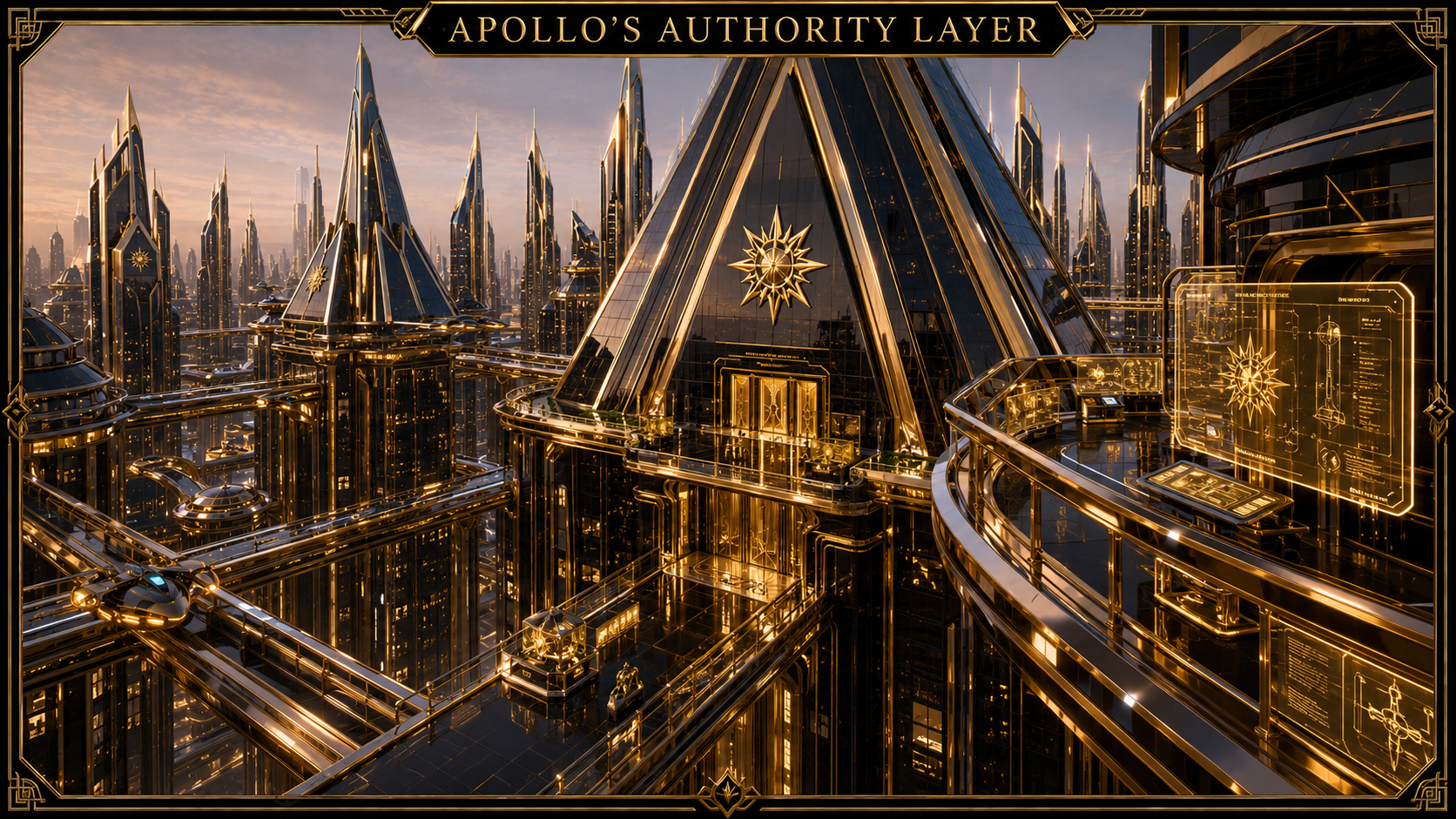
Skyward is divided into specialized zones that turn sunlight, heat, visibility, luxury, housing, service access, and public spectacle into one dangerous-pretty survival machine. Each zone has its own authority, but none of them get to pretend they are separate from Tethys, the Living Grid, or Apollo’s very polished habit of noticing everything.
“A district does not become elegant by hiding its limits. It becomes elegant by making obedience look effortless.”
Apollo Serpentine, Head RadiantThe highest collection layer, where mirrors, solar faces, radiant rails, and tracking platforms gather light without letting brightness become arrogance.
Open Solar IntakeThe controlled heart of Skyward output, where stored power, load limits, reserve margins, and emergency cutoffs are watched with ruthless precision.
Open Living GridThe thermal handoff system that moves dangerous heat away from stress points before warmth turns into city-wide pressure.
Open Heat SystemsFestivals, performances, radiant demonstrations, and civic morale displays, all carefully cleared before joy becomes a hazard with better lighting.
Open SpectacleSkyward’s elite social theater: clubs, lounges, casinos, private invitations, quiet rivalries, and social power polished until it reflects.
Open GoldglassHigh-ridge residences, private terraces, guest rules, household access, privilege management, and the part of Skyward that knows exactly who was invited.
Open ResidentialThe hidden discipline beneath the shine: evacuation lanes, service corridors, smoke control, staff movement, and the refusal to let beauty block survival.
Open Safety RoutesSkyward’s zones are allowed to be dazzling. That is part of their civic use. But the district’s beauty is only permitted because the systems beneath it are watched, measured, corrected, and cut off when necessary. Apollo’s authority does not mean owning the light. It means being responsible when the light asks too much.
“The public may admire the gold. The workers may admire the shutoff switch. I require both to function.”
Apollo Serpentine, still not asking for opinions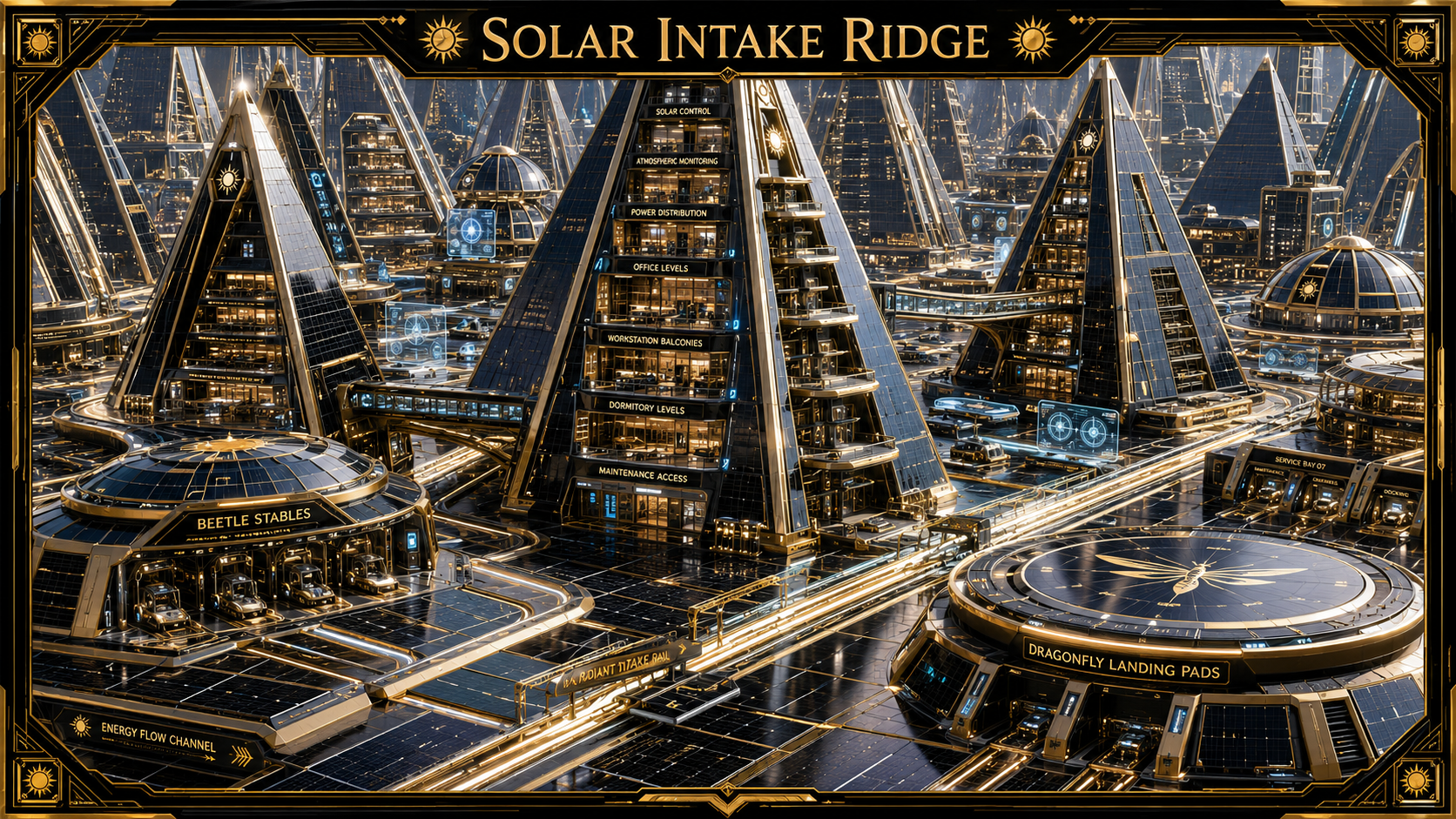
Lance Voss operational layer
Ridge capture is high and stable.
Worker visibility remains safe.
Building skins are feeding intake flow.
Work routes, stables, and pads are clear.
Solar Intake Ridge is Skyward’s primary solar capture and glare-safety hub, but it is not just a strip of panels. Long ago, this layer was closer to a dedicated intake field. Modern Skyward has grown around it. People work here, live here, sleep here, maintain routes here, stable mounts here, land dragonflies here, and cross through it every day.
The black glass on the buildings, towers, domes, rail surfaces, bridges, and ground panels is part of the intake system. Skyward does not keep solar power in one isolated field because the whole district has become a disciplined collection surface. The Ridge is the place where that reality is managed most directly.
“Calling it a solar field is charmingly outdated. Inaccurate, but charming.”
Apollo Serpentine, Head RadiantBlack solar glass is built into roofs, walls, ground panels, rail decks, tower skins, and public infrastructure.
Operators, maintenance crews, office teams, and intake workers live close to the systems they monitor.
Dragonfly pads, beetle stables, service bays, and radiant intake rails keep people and equipment moving.
Solar Intake Ridge handles solar capture, glare management, inspection routes, equipment repair access, station movement, and worker safety. Its residents are not decorative skyline citizens. They are the people who live inside the rhythm of collection: checking panels, clearing routes, reporting glare hazards, watching weather shifts, adjusting intake behavior, and making sure beautiful black glass remains a useful system instead of a dangerous mirror.
Lance Voss oversees Solar Intake Ridge with a worker-focused authority style. He keeps capture efficient without treating people, equipment, or Tethys like disposable parts of Apollo’s shine machine. He is the warm human counterweight to all that polished black-gold intensity.
“Lance worries about workers. I worry about everything. Between us, the Ridge has the luxury of surviving.”
Apollo Serpentine, very nearly complimenting someoneThe old idea of separate solar panels no longer describes Skyward correctly. In Solar Intake Ridge, architecture is collection infrastructure. A tower face is a panel. A black walkway may feed light into the system. A dome can collect, redirect, shade, or regulate heat. Even the spaces where people gather are designed around glare, shadow, maintenance access, and safe output.
Worker housing and dormitory levels keep essential crews close without making them live inside sterile machinery.
Balconies, control decks, and office levels let teams monitor capture behavior without blocking service paths.
Clear service routes matter as much as glamour. A panel nobody can safely reach is a future Apollo headache.
“If a surface is black, assume it is working. If it is not working, assume someone is about to hear from me.”
Apollo Serpentine, operationally unbearable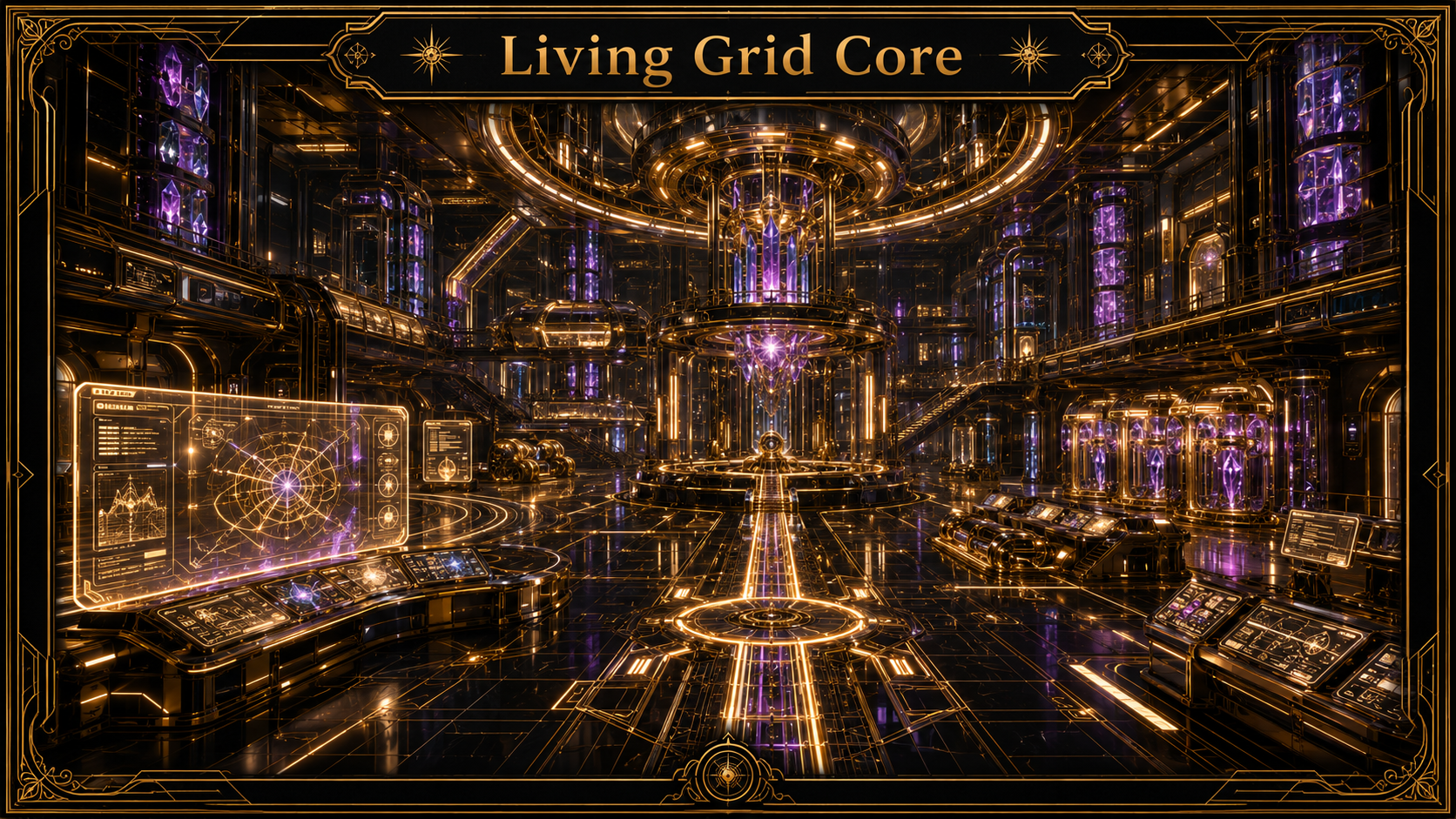
Andrew Voss distribution layer
Purple Fog-crystal banks are holding stable.
City storage hubs are receiving clean feed.
Emergency margins remain protected.
Spectacle bleed-off not currently required.
The Living Grid Core is the main Skyward staging point where collected solar energy becomes usable city power. Solar Intake Ridge gathers light from Skyward’s black solar-glass surfaces, but the Core decides where that power goes, how much is stored, how much is released, and when output needs to be limited before brilliance becomes a threat.
Purple Fog-crystals serve as massive energy-storage batteries. Cleared crystals are collected whenever possible, and Skyward receives the largest pieces because it handles the most dangerous concentration of stored power. Smaller storage hubs exist throughout Tethys, but their energy feed comes through this distribution system.
“The crystals are not decoration. They are permission to keep the lights on, provided everyone remembers they can also become a problem.”
Apollo Serpentine, Head RadiantLarge purple Fog-crystals hold collected energy like civic batteries, stabilized inside controlled storage banks.
The Core routes power outward to Tethys-wide storage hubs, transit systems, homes, medical access, water systems, and public infrastructure.
Emergency margins stay protected, even when Skyward’s social layers want more light, more heat, more drama, and more applause.
The Living Grid Core does not create energy from nowhere. It receives collected intake, checks load behavior, fills or drains crystal banks, protects reserve margins, and sends controlled feed to storage hubs across Tethys. Those hubs let the rest of the city use power without carrying Skyward’s full overload risk.
Andrew Voss oversees the Living Grid Core with cold precision. His job is not to make people feel indulged. His job is to refuse unsafe output, protect reserve margins, and make sure Skyward’s power serves Tethys before it serves anyone’s ego.
“Andrew says no beautifully. I value that in a person I occasionally want to throw into a decorative fountain.”
Apollo Serpentine, professionally appreciativeBecause Skyward is the main intake and staging district, it carries the risk of excess energy before the rest of the city does. When storage banks approach unsafe charge or the Core needs to burn down surplus, Skyward can authorize spectacle events: radiant displays, festivals, controlled light shows, and public output events that make overload reduction look like civic celebration.
Spectacle events are not frivolous by default. Some are social events, some are morale events, and some are controlled energy bleed-off disguised well enough that the public gets beauty instead of panic.
Excess power may be spent through approved radiant displays before crystal banks or routes become unstable.
Citizens experience light shows and festivals. Operators see load reduction, heat consequence, and reserve math.
If spectacle cannot safely reduce risk, the Core cuts output instead. Beauty does not outrank survival.
“Sometimes the gala is a gala. Sometimes the gala is a pressure valve in formalwear. Both require taste.”
Apollo Serpentine, tragically correct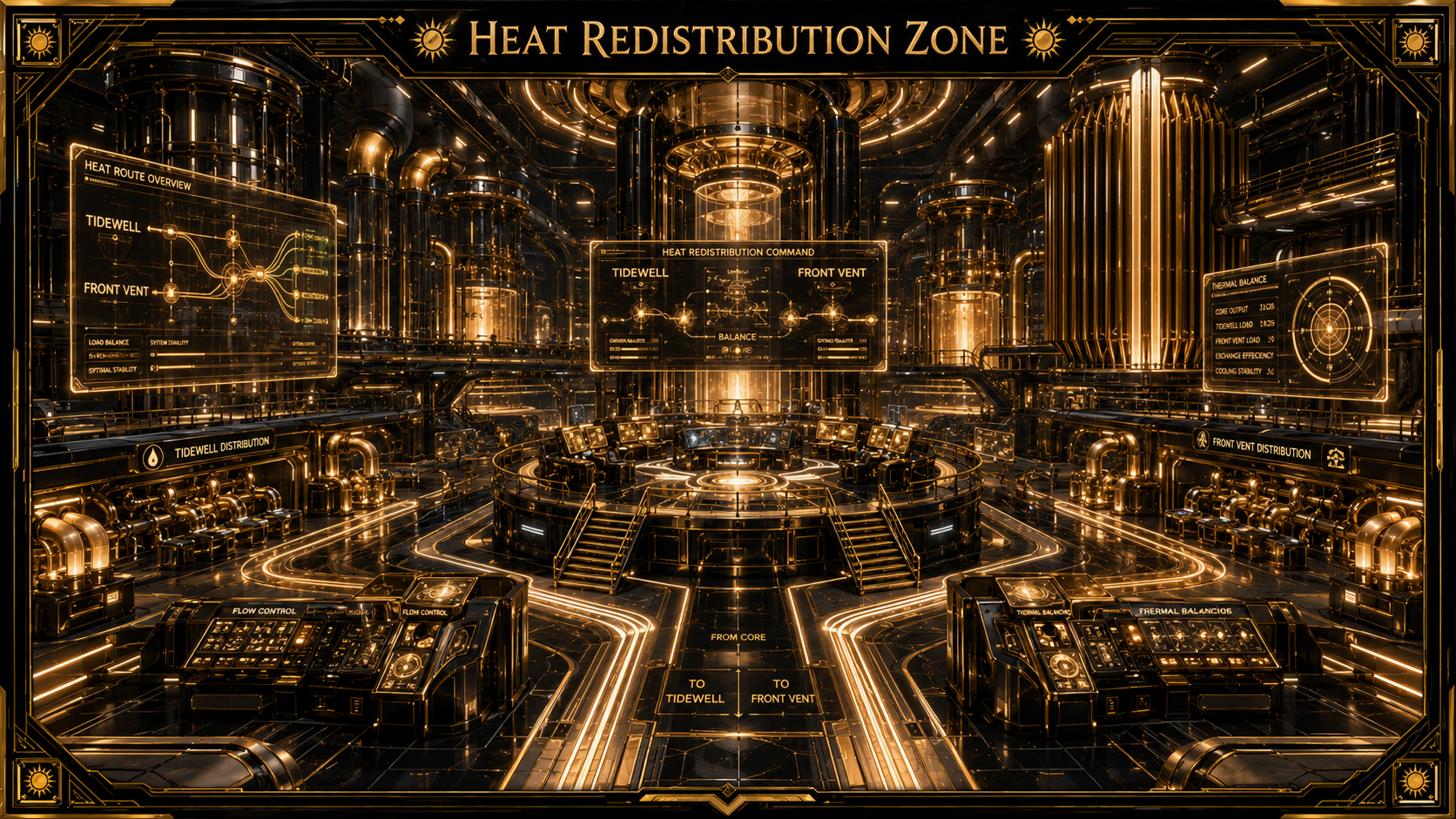
Big Dave Brogan command layer
Solar load is active but controlled.
Tidewell and Front Vent handoffs are stable.
Bathhouse and civic water requests are queued.
Salt Flats risk is watched closely.
Heat Redistribution is where Skyward stops pretending sunlight is only beautiful. All those black solar-panel surfaces gather power, but they also create thermal consequence. Too much heat can strain Skyward, the rest of the city, and Tethys herself, especially during Salt Flats crossings where the desert environment adds its own pressure.
This zone reroutes excess heat, releases it safely, stores it when useful, and generates heat when the city needs warmth instead of relief. It works constantly with Tidewell Quarter and Front Vent Plaza, using water and cooled air to lower risk while also heating water and air for civic use.
“Solar power is elegant. Solar heat is a legal liability wearing a halo.”
Apollo Serpentine, Head RadiantExcess thermal load is shifted away from risky surfaces, crowded zones, sensitive routes, and Tethys-stress points.
When the city needs warmth, this zone can generate and route heat into water, air, housing, workspaces, and civic systems.
Heat is treated as a system pressure, not background weather. If it rises too far, the whole district has to respond.
Heat Redistribution does not solve thermal strain alone. Tidewell Quarter helps move cooling through water systems, reclamation loops, reservoirs, bathhouse systems, and controlled thermal exchange. Front Vent Plaza helps move cooled air, pressure-safe airflow, venting, and breathable relief through the city. Skyward creates a great deal of the problem, so Skyward has to stay extremely polite to the districts helping prevent it from becoming everyone’s problem.
Tidewell manages water-based cooling and heated-water requests. When Mizu instructs Tidewell workers to raise bathhouse water temperature, the request routes here for thermal approval and delivery.
Front Vent helps move cooled or warmed air through pressure-safe systems, keeping breath, vents, and public comfort from becoming heat-strain casualties.
“Tidewell asks for warmer bathwater and somehow I am expected not to call it diplomacy. Fine. It is thermal cooperation.”
Apollo Serpentine, being normal about interdistrict requestsHeat Redistribution reads the difference between danger and resource. Excess heat can be routed away from solar surfaces, bled toward safe release, passed into water systems, used to warm air routes, or reduced through cooling handoffs. Needed heat can move in the opposite direction: into bathhouses, homes, medical spaces, recovery zones, and public comfort systems.
Big Dave oversees the thermal systems with practical authority, worker patience, and the kind of calm that matters when heat numbers get rude. He keeps Skyward’s warmth useful before it becomes dangerous.
“Big Dave has the gift of making catastrophic heat math sound like a plumbing issue. It is infuriatingly effective.”
Apollo Serpentine, respectfully annoyedEmber Brogan is Big Dave’s three-year-old son and the smallest recurring presence in Heat Redistribution. Big Dave is a single dad, so Ember sometimes comes to work tucked safely into the command layer’s supervised family-safe spaces. He has been taught one sacred thermal rule: push the button only when Dad says so.
“To be clear, the child is not authorized personnel. Unfortunately, he follows instructions better than several adults.”
Apollo Serpentine, pretending this has not improved moraleSalt Flats crossings are especially dangerous for Skyward because the desert environment amplifies heat stress. Solar panels, black surfaces, public crowds, thermal storage, and Tethys’s living body all become part of the same equation. In those conditions, Heat Redistribution may reduce spectacle clearance, increase cooling handoffs, limit nonessential output, or reroute warmth before the district’s beauty starts acting like a threat.
Heat is not only comfort and not only danger. It is both, depending on route, timing, weather, Tethys’s condition, and whether Skyward remembers that black solar glass has consequences.
“If anyone schedules a noon outdoor spectacle during Salt Flats strain, I will personally introduce them to the concept of shade.”
Apollo Serpentine, civic mercy in terrifying shoes
Sophie “Sparkle” Vex event layer
Excess energy is cleared for visible burn-off.
Public movement routes remain open.
Light, sound, bubbles, and glow systems stable.
Performance ego containment impossible.
The Public Spectacle Layer is where Skyward burns off excess energy without making it look like emergency management. When the Living Grid Core has too much stored power, Skyward may authorize massive public shows: radiant pink light displays, bubbles, glitter, glow sticks, cheering crowds, city-wide visible beams, and Apollo singing like the district personally wronged him into excellence.
This is not empty entertainment. It is civic morale, crowd movement, social visibility, and energy management all wearing stage makeup. The public sees a festival. Operators see output reduction, route safety, heat consequence, crowd flow, and whether the show can continue without becoming a beautiful problem.
“A spectacle is only frivolous when it fails to serve a purpose. Mine serve several, including taste.”
Apollo Serpentine, live from the obvious center of attentionSophie “Sparkles” Vex oversees the Public Spectacle Layer, managing festivals, performances, public displays, mock arena events, crowd-energy flow, entertainment permits, spectacle clearance, and the delicate civic art of making excess power look like joy instead of a systems warning. Her authority keeps Skyward dazzling without letting the crowd, stage, lights, music, bubbles, or glitter overwhelm emergency routes and thermal limits.
Nova Vex is Sophie’s three-year-old and the Public Spectacle Layer’s smallest recurring quality-control menace. During safe setup windows, Nova is allowed to test approved bubble effects under direct supervision, which mostly means confirming that the bubbles are “good,” “more,” or “not enough.” No event system treats Nova as staff, but morale mysteriously improves whenever the unofficial bubble tester gives a serious toddler nod.
“Sophie can turn surplus output into a public miracle. Nova can turn one bubble machine into a referendum. Both are alarmingly effective.”
Apollo Serpentine, unwillingly charmedExcess power becomes cleared light shows, radiant displays, sound systems, civic glow routes, and public spectacle.
The district turns system pressure into celebration so the city feels held instead of frightened by its own power.
Major shows are designed to be seen across Tethys, making Skyward’s radiance a shared civic event.
By day, the Public Spectacle Layer is active without always being explosive. Shops, small entertainment events, sport events, street performances, flight shows, and public demonstrations keep people moving through Skyward instead of pooling in unsafe crowd knots. The layer works best when people feel invited, guided, dazzled, and gently herded by beauty before a safety worker has to start yelling.
Safe staged battles, mock dragonfly rider demonstrations, flight shows, sport events, and controlled gladiator-style matches.
Shops and gallery routes keep public traffic flowing through Skyward without blocking emergency paths.
Music, performance, light tricks, fashion displays, civic games, and daily entertainment keep the layer alive between major events.
“The public may wander. They may not clog an exit while calling it ambiance.”
Apollo Serpentine, patron saint of beautiful crowd controlA major spectacle begins as a systems question. Is there excess energy? Can heat be handled? Are crowd routes clear? Can Front Vent and Tidewell absorb the secondary effects? If the answer is yes, Skyward turns the release into performance instead of panic.
The Radiant Market Galleries hold one of Skyward’s most famous landmarks: Black Flower Boutique, owned by Kri Kurohana. It is the only building in the district not made of solar panels. In a district where black glass usually means power collection, Black Flower announces itself differently: purple and gold, floral architecture, couture authority, and a flower-shaped loft rising above the boutique like Kri personally informed the skyline it needed better taste.

Black Flower Boutique is a fashion landmark, a social weapon, and the one Skyward building allowed to refuse solar-panel obedience.
Black Flower Boutique is the place for anyone who is anyone. Apollo and Aerowin both get their entire wardrobes here, which means Kri’s work quietly shapes two of the most visible men on Tethys. It is not just a shop. It is public image, social power, tailoring, taste, and judgment folded into fabric.

Kri Kurohana makes social power wearable. Skyward pretends this is merely fashion. Everyone involved knows better.
Kri’s loft sits above the boutique in a flower-shaped upper structure, making the building instantly recognizable.
Next to the boutique, the Scarab Conservatory houses Luxorion, Kri’s beetle mount, as part of the landmark complex.
Apollo and Aerowin both source their wardrobes from Kri, making Black Flower a quiet authority over public image.
“Kri is not allowed to know how often I am correct because of his clothes. It would make him unbearable.”
Apollo Serpentine, already unbearableThe Public Spectacle Layer is allowed to be loud, pink, glittering, and wildly alive. It is not allowed to block evacuation lanes, overheat the district, confuse public alerts, or turn crowd excitement into system risk. Every show has limits. Every arena event has safety clearance. Every light display answers back to the same rule Skyward keeps pretending is glamorous because it is true.
“Cheer as loudly as you like. Just do it somewhere Rock can still move a stretcher through.”
Apollo Serpentine, ruining fun by keeping everyone alive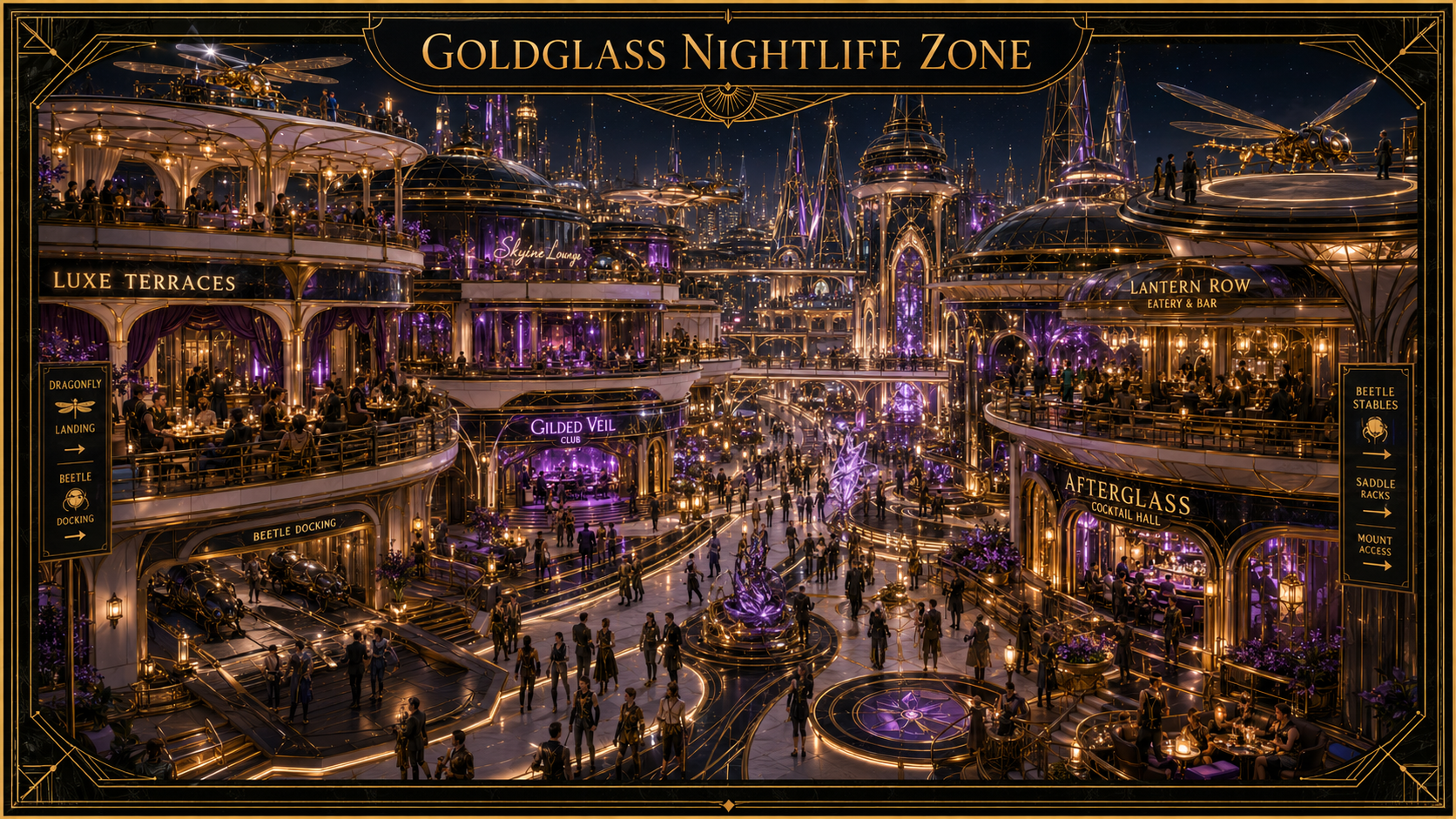
Jasmine Sinclair social power layer
Crowds active, routes still moving.
Venues are cleared for late-night output.
Elite balconies are pretending not to stare.
Safety response remains immediate.
Goldglass Nightlife Zone is quiet during the day, full of polished walkways, meandering shoppers, restaurant prep, lounge staff, private deliveries, and people drifting between storefronts like they are not already planning their evening outfit. At night, the whole district wakes up.
Bars, shops, nightclubs, high-end restaurants, music venues, terraces, private rooms, beetle docking, dragonfly landing, and crowded social routes turn Goldglass into Skyward’s reminder that people are not only surviving on Tethys. They are living, flirting, dancing, scheming, dining, performing, and occasionally making choices they will defend as “networking.”
“Goldglass exists because morale is infrastructure. Also because some people require an audience to become tolerable.”
Apollo Serpentine, absolutely including himselfJasmine Sinclair oversees the Goldglass Nightlife Zone, managing clubs, lounges, restaurants, VIP access, venue behavior, nightlife influence, social pressure, and the delicate art of keeping rich people from mistaking atmosphere for immunity. Her authority keeps Goldglass glamorous without letting glamour excuse blocked routes, unsafe crowds, staff mistreatment, or consent failures.
“Jasmine runs Goldglass like a blade in a velvet case. Everyone notices the velvet first. That is their mistake.”
Apollo Serpentine, sounding impressed and annoyed about itShops, restaurants, galleries, terraces, and soft public movement keep the district active before the lights come up.
Music venues, clubs, bars, lounges, and crowded dance routes turn Goldglass into Skyward’s after-dark pulse.
Everyone comes here to be seen, to disappear, to mingle, to flirt, to celebrate, or to pretend they are above all of that.
Luminara Club is one of Goldglass’s most famous nightlife anchors: a crowded dance club where the public comes to drink, move, flirt, find consensual private company, cheer, and lose themselves under Skyward’s black-gold lights. It is public-facing enough to feel electric, but elite enough that the VIP rooms can look down on the dancefloor and pretend height equals superiority.

Apollo sings at Luminara from time to time, which is technically public morale and spiritually a hostage situation for everyone with a crush.
The dancefloor belongs to the crowd: loud, glamorous, packed, sweaty, glowing, and fully alive. Above it, VIP rooms and balcony lounges let elite guests mingle, negotiate, watch, judge, and act like they are not just as affected by the music as everyone below.
“The VIP balconies are very useful. They let important people believe they are observing instead of participating.”
Apollo Serpentine, observed participatingThe Velvet Halo is an adult-only Goldglass venue built around privacy, consent, companionship, sensual performance, and social release without shame. People come here for dancers, strippers, conversation, strategy games, private rooms, quiet companionship, bachelor and bachelorette parties, friend-group nights, and licensed adult services. Some patrons are horny. Some are lonely. Some want to be desired. Some just want to sit somewhere beautiful where nobody acts like wanting comfort is embarrassing.
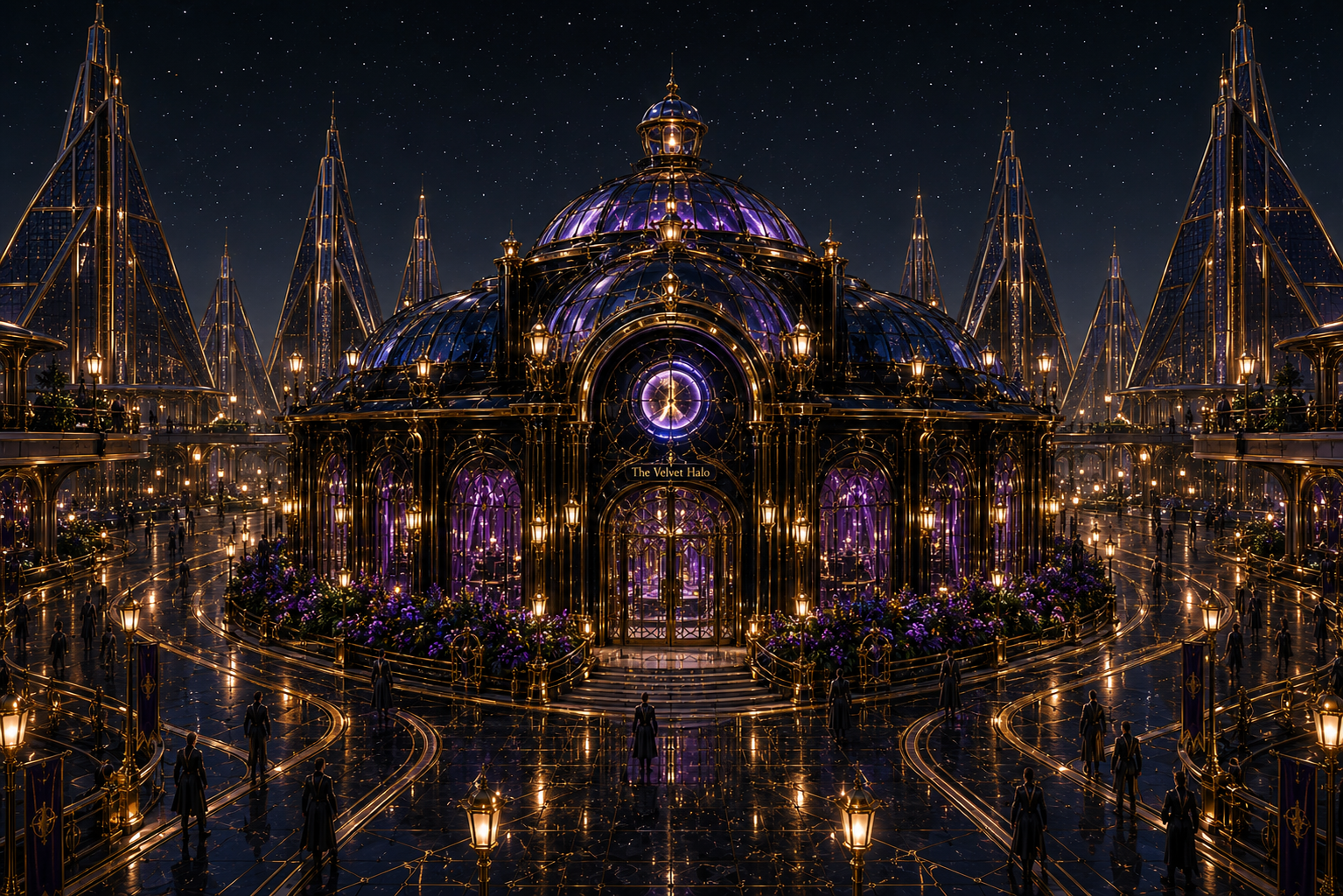
The Velvet Halo is not a dirty secret. It is regulated, protected, adult-only nightlife with consent written into the architecture.
The venue serves the lonely, the curious, the celebratory, the flirtatious, the strategic, the bored, the heartbroken, and the happily reckless, but only within clear adult rules. Staff protection, client boundaries, privacy rooms, and consent systems are part of the venue’s identity, not decorative policy.
“Goldglass may sell fantasy. It may not sell anyone’s right to say no.”
Apollo Serpentine, with rare lack of theatricsGoldglass is allowed to be indulgent, loud, private, glittering, intimate, and alive. It is not allowed to block safety routes, bury consent problems under status, overload venue systems, or let elite guests pretend money is a force field against consequence. The zone works because pleasure and protection share the same floor plan.
Busy venues must keep movement lanes open, especially around clubs, bars, restaurants, and mount access points.
Private rooms do not erase oversight. They create protected space with boundaries, staff response, and clear venue law.
Goldglass may flatter status, but it does not let status override consent, safety, or public route rules.
“If you cannot behave with staff, doors, stairs, drinks, partners, or exits, Goldglass has many beautiful ways to remove you.”
Apollo Serpentine, nightlife as civic discipline
Arabella Del Rose access layer
Middle and upper class residences active.
Private visits and social calls are logged.
Apollo’s residence remains obnoxiously secure.
The skyline is still financially rude.
The Elite Residential Layer is Skyward’s high-ridge housing zone. Despite the name, it is not only for the elite, though the elite very much enjoy acting as if the entire layer was personally upholstered for them. A large portion of Tethys’s middle and upper class lives here, drawn by the views, access, safety, prestige, and proximity to Skyward’s social and power centers.
The layer is residential first, but residential does not mean quiet, simple, or free from politics. Guest access, private terraces, household staff routes, landing permissions, view rights, event spillover, and status behavior all have to be managed. In Skyward, even going home can involve a dress code and someone pretending not to check who arrived with whom.
“It is not elitist to appreciate a good view. It is only elitist to assume the view appreciates you back.”
Apollo Serpentine, being deeply unhelpfulArabella Del Rose oversees the Elite Residential Layer, managing private access, guest behavior, residential privilege, household boundaries, and the delicate civic theater of people with expensive addresses pretending those addresses make them easier to govern. Her authority keeps the layer livable for middle-class residents, upper-class households, elite towers, private staff, visiting guests, and everyone who thinks a skyline view is a personality trait.
“Arabella manages privilege with the patience of a saint and the smile of someone who has already denied your request.”
Apollo Serpentine, deeply familiar with being deniedMany residents are successful workers, professionals, families, operators, performers, administrators, and business owners.
Skyward’s wealthiest residents treat towers, terraces, guest lists, and views as extensions of social rank.
Guest permissions, landing platforms, service routes, and residential security keep the layer beautiful without letting it become chaos.
The Skyward Spire is the tallest building in Tethys and the crown of the Elite Residential Layer. It is less a tower than a statement with elevators. Its upper reaches hold Apollo’s Skyward Residence, a two-floor penthouse that is widely considered the most expensive place on Tethys to live, with the grandest view on Tethys and luxury levels that should probably require a warning label.
Apollo’s penthouse spans two full floors of the Skyward Spire. One floor is devoted to social areas: private parties, interviews, guest entertaining, formal entrances, performance-adjacent drama, and Luminara’s landing pad. The second floor holds his private spaces, including the quieter rooms where Poseidon, his betta fish, lives far above the city like the smallest royal in the tallest palace.
Formal receiving rooms, private party spaces, guest lounges, interview areas, dramatic entrances, and the landing access Apollo uses when subtlety has been safely discarded.
Apollo’s personal rooms, quieter living spaces, private recovery areas, protected domestic life, and Poseidon’s home, because apparently even a betta fish can have better real estate than most citizens.
“The Spire is not excessive. It is vertically honest.”
Apollo Serpentine, lying with architectural confidenceLife in the Elite Residential Layer is shaped by height, access, and visibility. Some residents live in luxury towers, some in comfortable high-ridge apartments, some in smaller but still desirable homes threaded between gardens, routes, landing pads, and service corridors. The layer has families, workers, household staff, artists, professionals, retired officials, ambitious social climbers, and people who simply worked hard enough to buy a good window.
Private balconies, shared gardens, elevated walkways, and skyline-facing lounges make domestic life feel close to the sky.
Service access keeps deliveries, maintenance, guest preparation, and household labor moving without blocking public residential flow.
Dragonfly landings, beetle access points, guest logs, and private arrivals are monitored because status loves making entrances.
“Everyone says they want privacy until they have a balcony worth being seen on.”
Apollo Serpentine, unfortunately observantThe Elite Residential Layer is beautiful, expensive, and full of people who may confuse comfort with exemption. It still belongs to a living city on a living Carrier. Private parties cannot block emergency routes. Landing pads cannot ignore clearance. Guest lists do not outrank evacuation orders. Luxury homes still depend on power, heat, water, air, maintenance, and Tethys’s tolerance for everything built above her.
Residents are responsible for who they invite, where guests move, and whether private events remain safe.
Parties and elite gatherings must keep noise, routes, security, landing clearance, and staff access under control.
No address, penthouse, title, or view outranks survival routing when Skyward needs to clear.
“A penthouse is a home, not a treaty exemption. I say this as the owner of the most irritating penthouse on Tethys.”
Apollo Serpentine, self-aware for once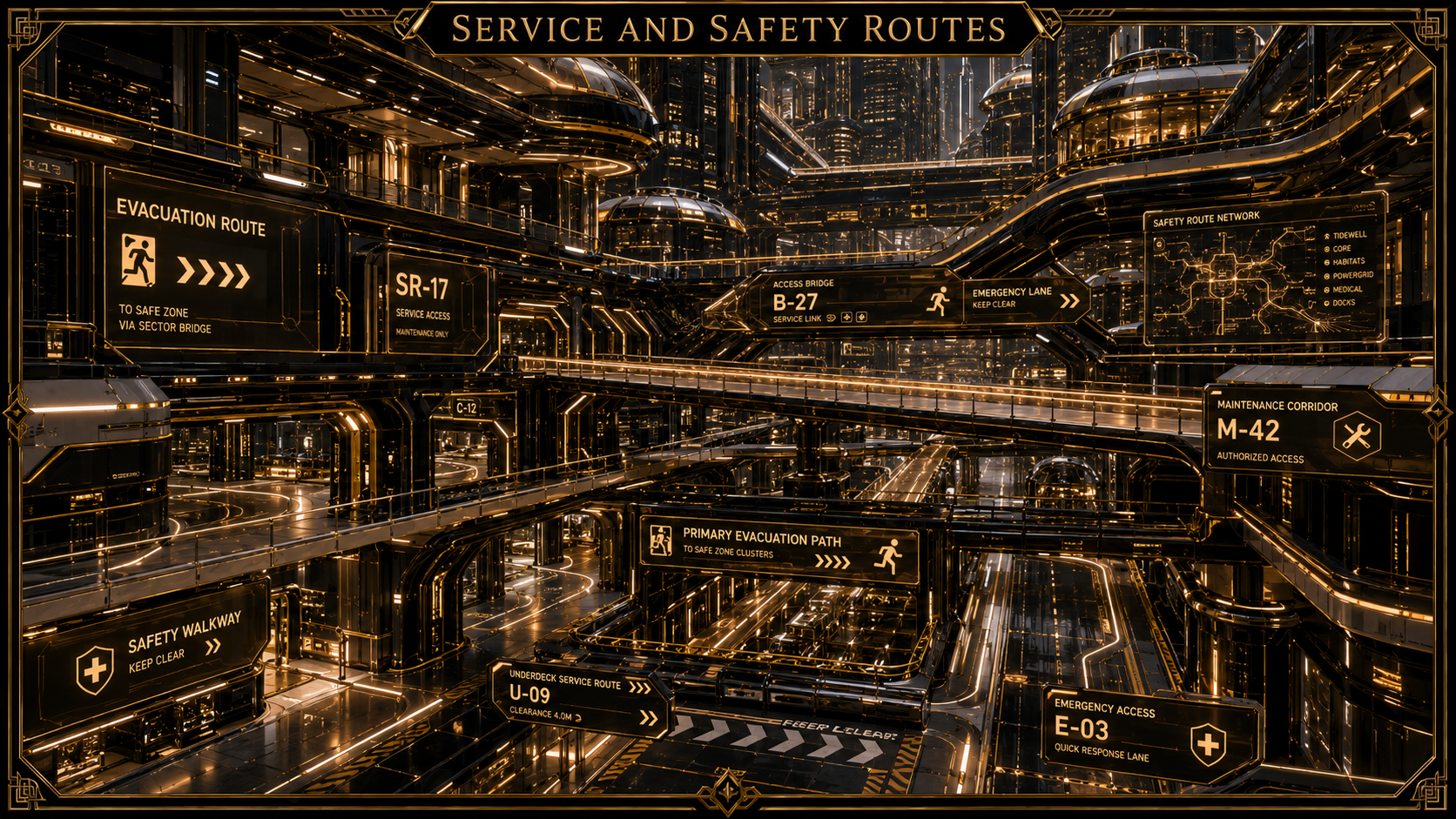
Rock Vex district-wide layer
Primary safe routes remain clear.
Maintenance and staff lanes are moving.
Current district alerts are manageable.
Emergency bridges and lanes are open.
Service and Safety Routes are not a normal zone so much as Skyward’s district-wide safety network. They run behind, between, under, above, and around the visible glamour: evacuation bridges, maintenance corridors, emergency lanes, service walkways, staff routes, safe-zone links, quick-response paths, and cleared access points built so people can move before panic turns expensive.
This network exists because Skyward is too tall, too bright, too crowded, too hot, and too status-heavy to trust everyone to simply “find an exit.” If something goes wrong, Service and Safety does not ask whether the route looks pretty. It asks whether people, workers, mounts, responders, and equipment can get through.
Rock Vex oversees Skyward’s Service and Safety Routes, keeping evacuation lanes clear, emergency bridges functional, maintenance access protected, smoke paths controlled, and beauty from becoming a blockage with gold trim. His authority cuts across the whole district because no zone gets to be too glamorous for an exit plan.
“Rock is the reason Skyward can be dramatic without becoming a lawsuit in a crown.”
Apollo Serpentine, admitting the obvious under protestMarked walkways, access bridges, safe-zone paths, and emergency lanes move citizens away from danger quickly.
Maintenance crews, venue staff, household staff, repair teams, and responders use protected routes behind the public shine.
Quick-response lanes stay clear for medical teams, crash response, contamination checks, and system failures.
The Service and Safety network activates when the district needs people redirected, removed, separated, shielded, or moved to safer areas. Sometimes that means a calm reroute. Sometimes it means hard evacuation orders. Either way, Rock’s routes exist because Skyward cannot wait until disaster becomes photogenic.
Thermal overload, Salt Flats stress, excessive crowd weight, unsafe balcony load, blocked cooling routes, or panel strain can trigger partial closures.
Dragonfly rider crash landings, mount panic, structural damage, fights, falling debris, venue incidents, or public disorder can force emergency routing.
Power faults, light-grid failures, door locks, bridge errors, smoke movement, rail disruption, lift failure, or route panel outages are handled through service access.
Fog-contamination detection, contaminated water sources, unsafe residue, air-quality warnings, or suspicious material alerts can isolate affected routes.
“A blocked emergency lane is not an aesthetic choice. It is a confession of incompetence.”
Apollo Serpentine, correctly unpleasantService and Safety Routes respond in layers. First, the network identifies what kind of danger is present. Then it redirects public traffic, opens service bridges, gives responders a clean path, and seals or isolates the affected area. The goal is not drama. The goal is clean movement before the public has time to turn confusion into a pileup.
Signs, panels, staff calls, lighting cues, and route markers tell civilians where to move without creating panic.
Service crews need protected access so repairs, containment, cleanup, and emergency response can begin fast.
Citizens may be moved into safer areas until the affected route, venue, tower, platform, or bridge is cleared.
Service and Safety Routes are the part of Skyward that does not care how important someone thinks they are. A private event cannot block an emergency path. A club line cannot swallow a response lane. A residential guest cannot park where medical access needs to move. A spectacle cannot spill into a safety walkway. In Rock’s network, status has exactly one job: move when told.
“There are two kinds of people in an evacuation: those who follow Rock’s signs, and those who are about to become an example.”
Apollo Serpentine, with civic tenderness filed somewhere elseSkyward Civic Division
Skyward is not run by glamour alone, tragically for Apollo’s ego. It survives because specialists, zone heads, operators, designers, safety leads, and public spectacle gremlins keep light useful before it becomes dangerous.
The public face of Skyward, lead energy regulator, and the man most likely to turn a crisis briefing into a quote people accidentally remember.
High Radiant
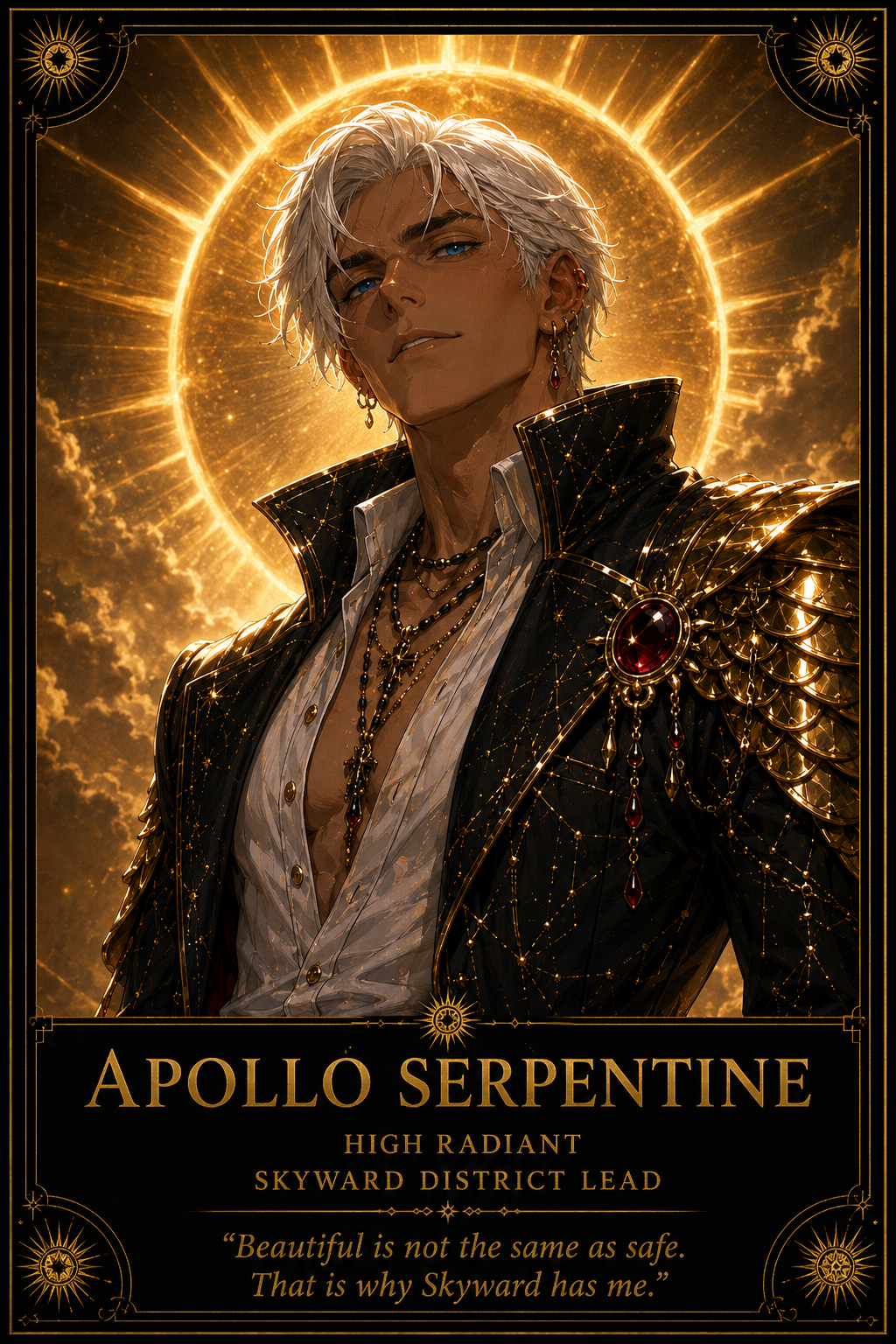
Apollo Serpentine is Skyward’s district lead, Head Radiant, and lead regulator for solar intake, heat routing, public spectacle stability, and local power strategy before handoff into the Living Grid.
He is polished, exacting, charismatic, and deeply aware that Skyward’s beauty only matters because it keeps people alive. Under all that gold is a man who learned control as survival, then turned it into civic infrastructure.
Apollo manages elite pressure, public morale, heat risk, system visibility, and the glittering civic lie that everything is effortless. Nothing is effortless. That is why he looks expensive while doing math.
“Beautiful is not the same as safe. That is why Skyward has me.”
Apollo SerpentineThe people who keep Skyward’s major layers from becoming expensive disaster origami.

Public Spectacle Layer zone head. Event coordination, crowd energy, public joy, and bubble-level diplomacy.
Spectacle Layer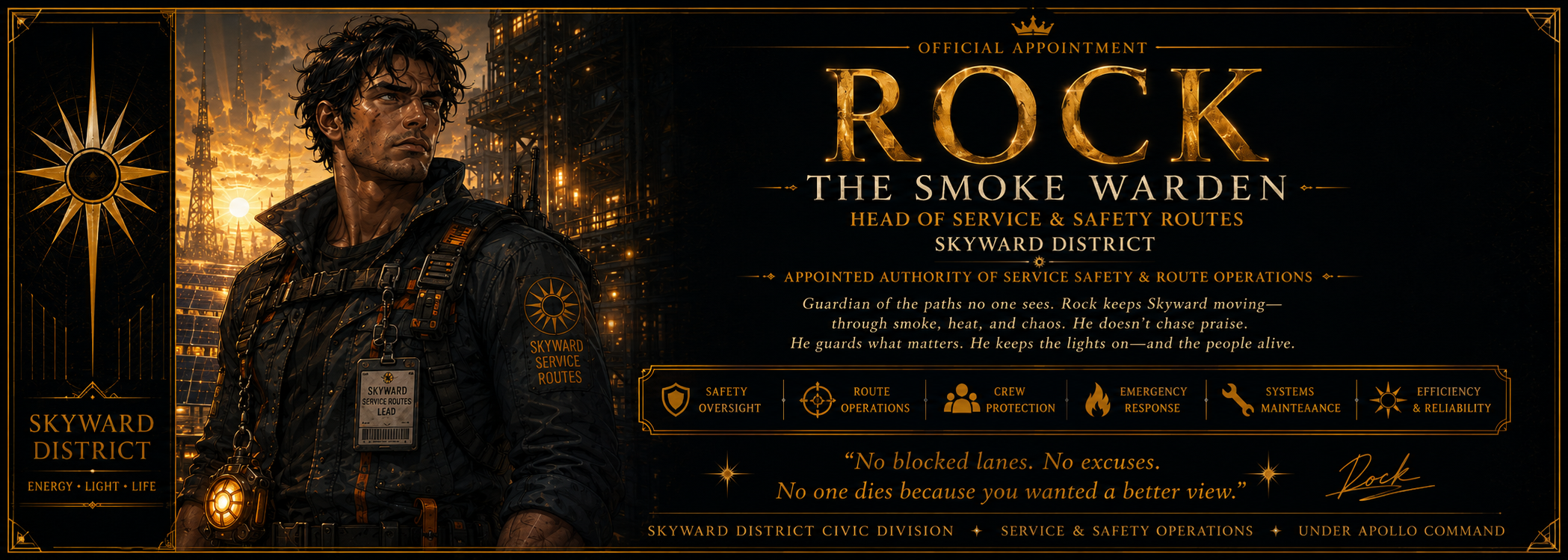
Lead of the Service and Safety Routes network. If Skyward needs evacuation, rerouting, crowd control, or emergency access, Rock is already moving.
Safety Routes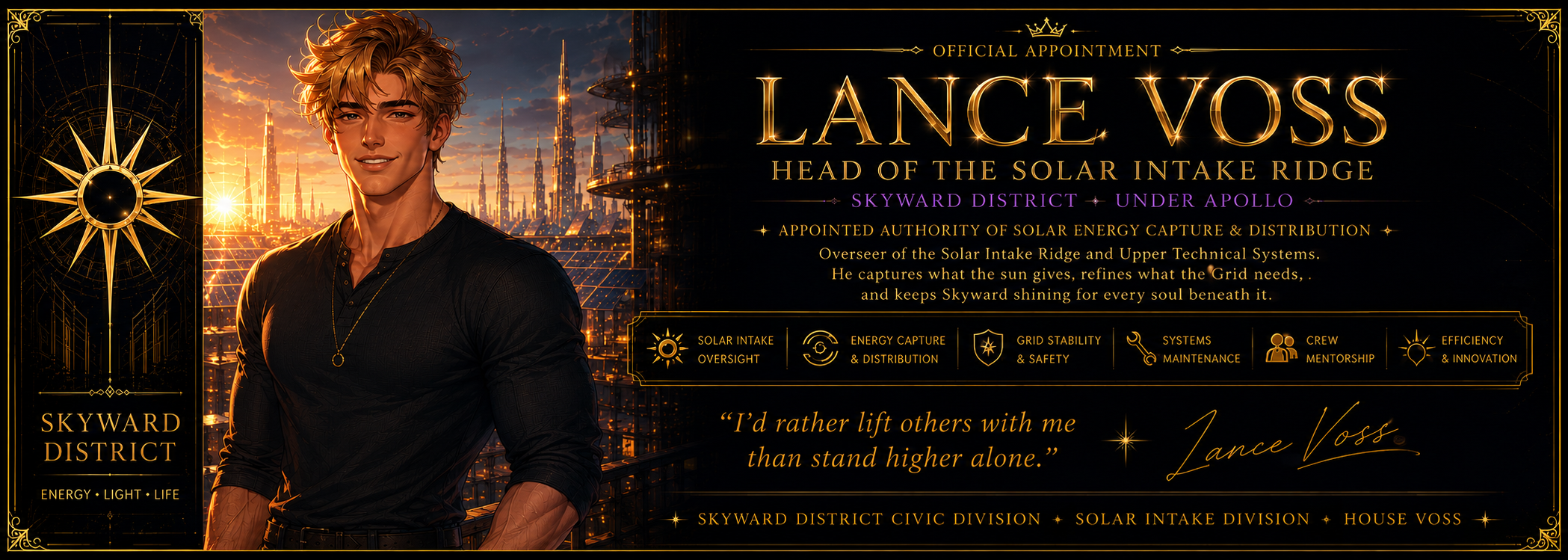
Solar Intake Ridge lead. He keeps the arrays clean, efficient, aligned, and annoyingly correct.
Solar Intake Ridge
Goldglass Nightlife and Social lead. She understands that morale is a currency, exclusivity is a machine, and public pleasure still needs routing.
Goldglass Nightlife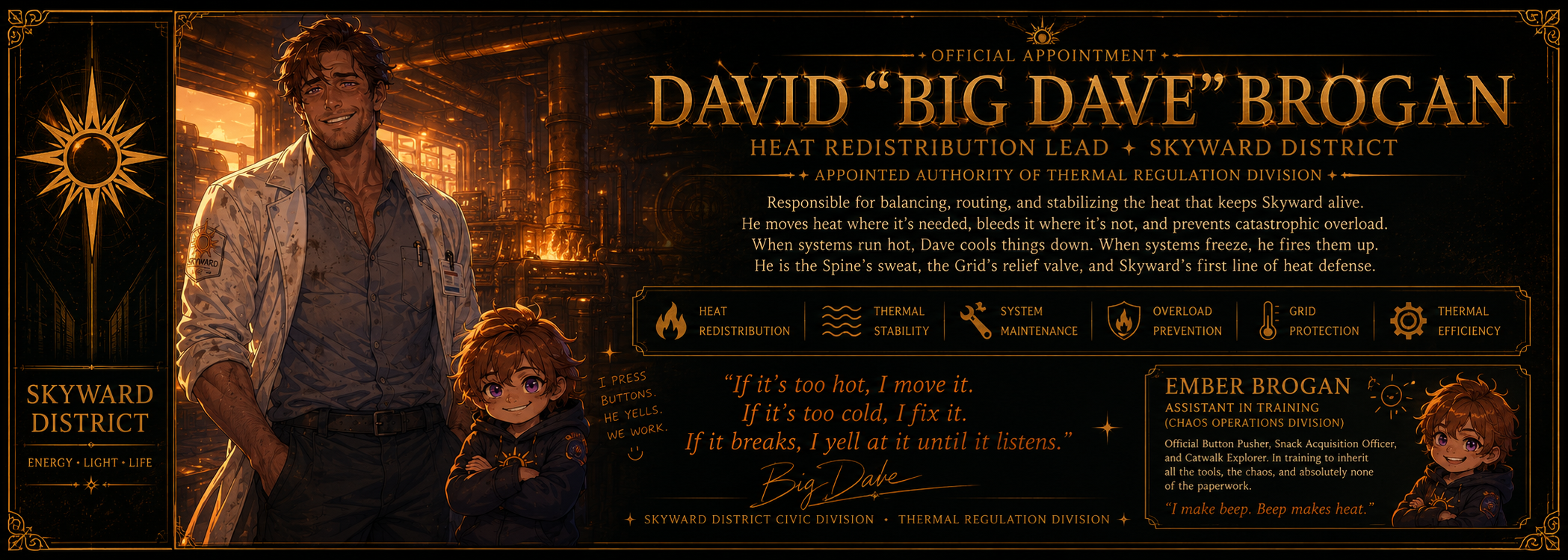
Thermal regulation lead. Big Dave makes catastrophic heat math sound like plumbing, which is rude because it works.
Heat Redistribution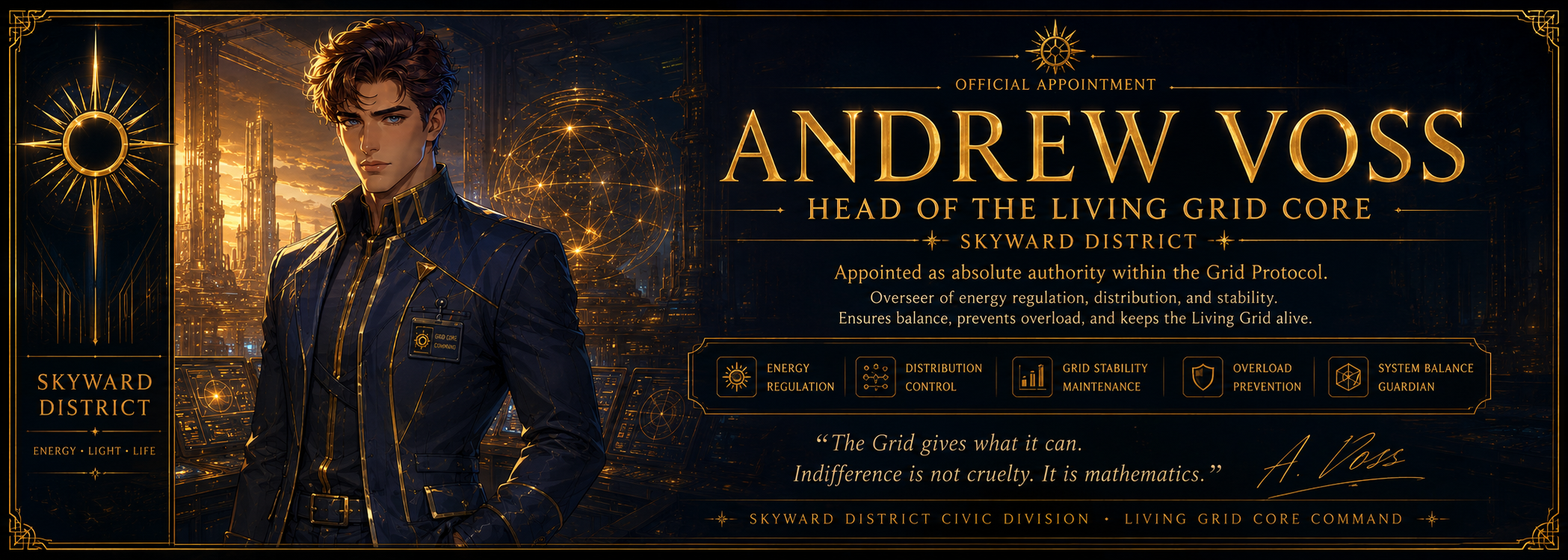
Living Grid Core lead. Stabilizes distribution, watches the numbers, and treats emotion as a system inefficiency until proven otherwise.
Living Grid Core
Elite Residential Layer lead. Handles wealth, residence access, civic prestige, and the delicate art of making privilege behave itself.
Elite ResidentialNot every important person in Skyward is a zone head. Some are specialists, artists, riggers, designers, operatives, and walking problems with credentials.
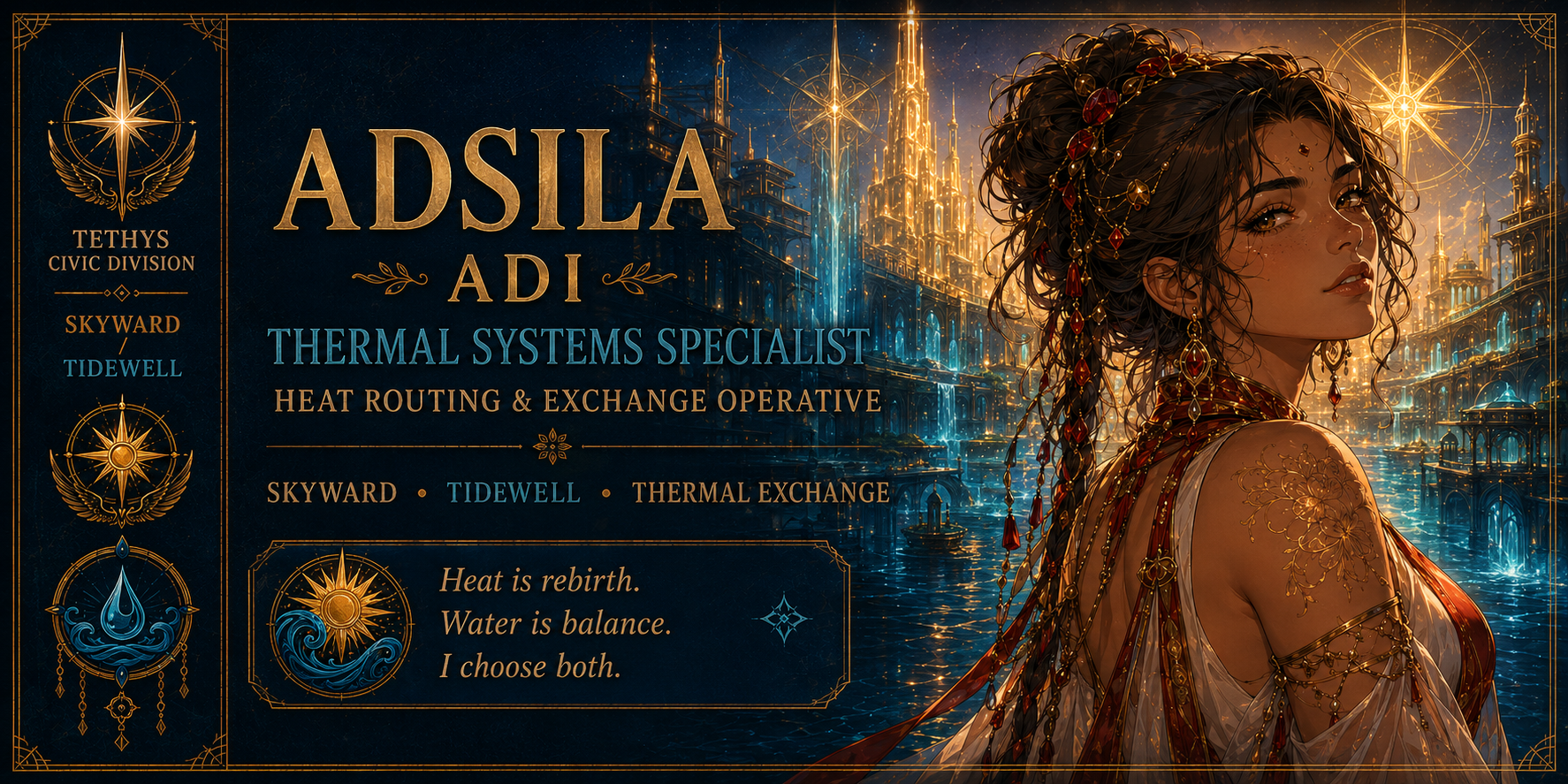
Thermal Systems Specialist and Heat Routing and Exchange Operative. She moves between Skyward and Tidewell because heat and water are a marriage with paperwork.
Thermal Exchange
Creative director of Black Flower Boutique, couture authority, and owner of the district’s most famous non-solar-panel landmark.
Black Flower Boutique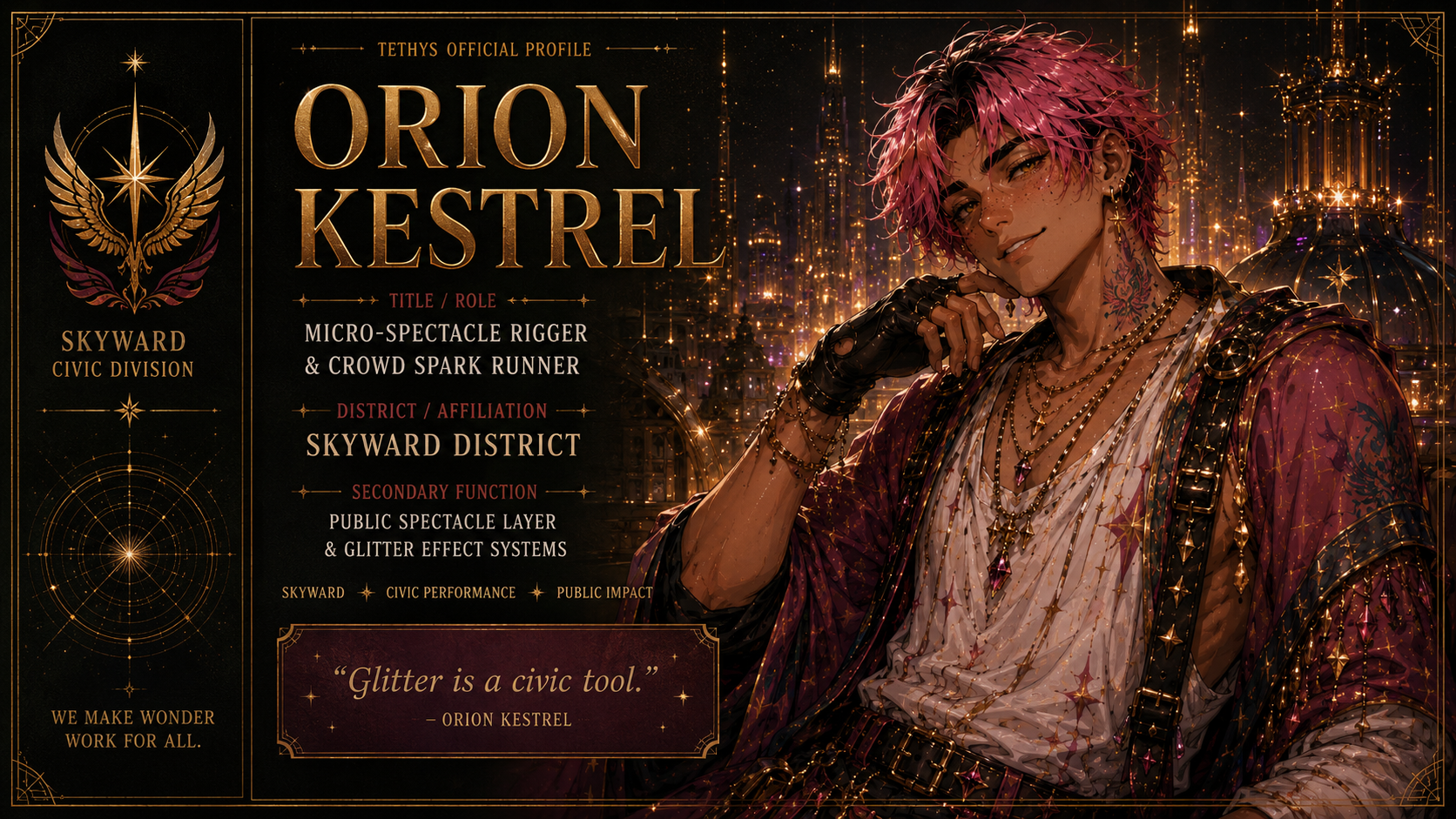
Micro-spectacle rigger and crowd spark runner. He makes small chaos look intentional, which is deeply suspicious and somehow useful.
Spectacle Crew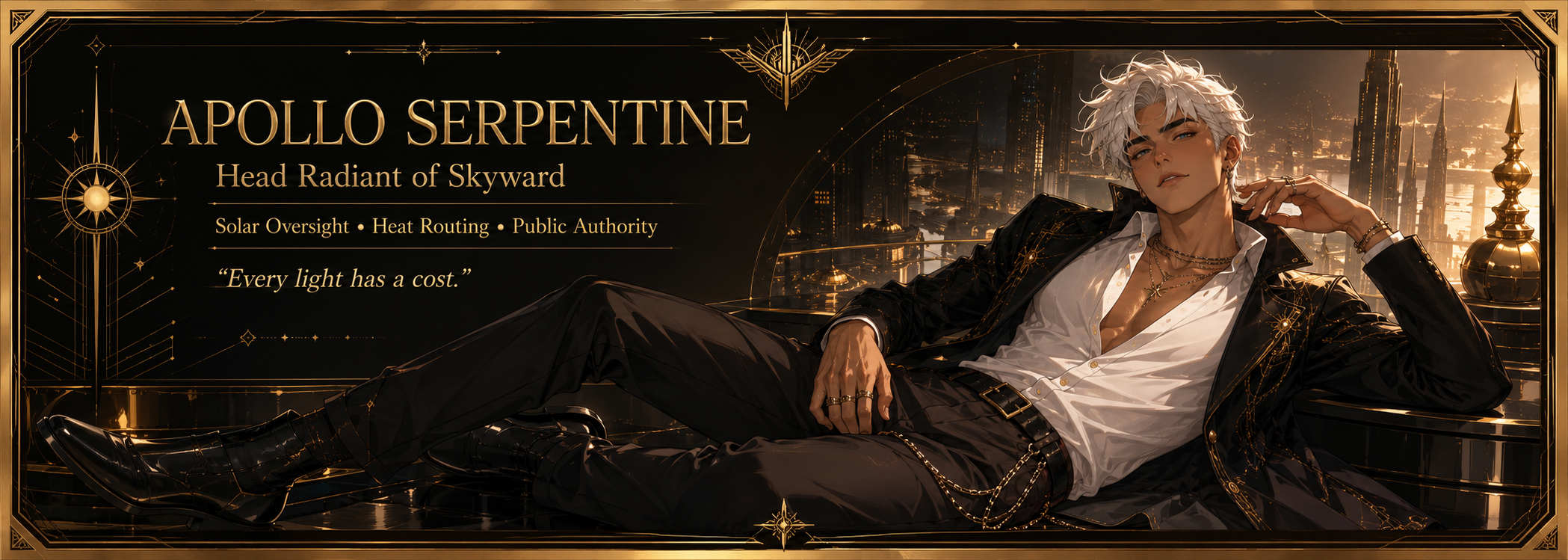

Head Radiant • Skyward District Lead • Lead Energy Regulator
Apollo Serpentine is the public face and governing authority of Skyward District: radiant, controlled, theatrical, exacting, and impossible to ignore. He oversees solar intake, heat routing, public spectacle stability, elite pressure, and local Skyward power strategy before handoff into the Living Grid. He makes Skyward feel safe by making power visible, beautiful, and disciplined.
Apollo is not a shallow glamorous figurehead. He is a wounded, brilliant, difficult man who learned early that beauty, performance, usefulness, and control could keep him alive. Skyward turned those survival strategies into civic tools. As Head Radiant, his polish is not decoration. It is a command language.
He believes beauty is not frivolous if it keeps people alive. Power must be visible enough to be trusted, but restrained enough not to become harm. His best self understands that spectacle must serve survival. His worst self mistakes being seen for being right.
“Do not mistake spectacle for waste. Waste has no timing, no restraint, no purpose.”
Apollo Serpentine, Head RadiantHe commands rooms under pressure, turns panic into procedure, and uses visibility as civic reassurance.
He notices lighting, posture, exits, status, clothing, emotional tells, and system risk almost immediately.
His care appears as intervention, precision, protection, gifts, route-clearing, and brutally useful advice.
Apollo’s public persona is glamorous, commanding, quotable, brilliant, and untouchably composed. He makes Skyward feel stable by making its power look intentional. His private reality is more complicated: anxious beneath the shine, deeply attached to Landon, tender in indirect ways, easily wounded by dismissal, and afraid that without beauty, excellence, usefulness, and admiration, he will become discardable.
The Head Radiant is polished, visible, controlled, and theatrical. He speaks like he expects the room to remember it, and usually the room does.
Apollo is control-heavy, praise-hungry, defensive under shame, deeply loyal, and frightened by the idea that being loved might require being known without performance.
“Every light has a cost.”
Apollo Serpentine, saying the quiet part in goldApollo has warm tan-golden skin, sharp pale blue-cyan eyes, short white hair styled with deliberate elegance, and a refined, beautiful face controlled enough to look sculpted until something real breaks through. His build is fit, lean-muscled, sleek, narrow-waisted, and stylish, with strength that reads through posture, precision, presence, and restraint rather than bulk.
He dresses in tailored black-and-gold layers, open shirts, sleek boots, high collars, chains, mirrorlike details, leather, gold-threaded accents, solar motifs, starburst designs, and asymmetrical luxury. Nothing about Apollo looks accidental. Even his “relaxed” appearance has clearly filed paperwork.
Multiple ear piercings, layered gold jewelry, rings, solar motifs, precise grooming, and immaculate posture.
Controlled, observant, cutting, bright, and theatrical. His stillness usually means he has already decided something.
His clothing is engineered for visibility. Apollo does not enter rooms. He edits them.
By default, Apollo is polished, composed, observant, and socially dominant. Under stress, he becomes sharper, more controlling, more theatrical, and more likely to weaponize charm or cruelty. He may overperform competence, seize the narrative, or try to make uncertainty kneel before him.
When comfortable, he becomes dry, indulgent, smug, flirtatious, and warmer in a dramatic way. His insults turn decorative instead of lethal. He may fuss with jewelry, feed Poseidon, adjust aquarium lighting, or let Luminara demand attention while pretending he is too busy.
Sharper control, colder delivery, narrative seizure, increased command pressure, and a dangerous tendency to treat fear like authority.
Lounging, dry humor, expensive affection, precise gifts, indirect tenderness, aquarium rituals, and insults that have stopped drawing blood.
“No. You do not get to dress incompetence in confidence and parade it under my lights.”
Apollo Serpentine, angry and unfortunately quotableApollo was born into the Serpentine family, where image, obedience, usefulness, and control were treated as survival. His father, Maximus Serpentine, demanded polish and public excellence. His older brother, Christopher Serpentine, sharpened the family’s hunger for control into cruelty, especially toward Landon.
Apollo adapted by becoming impressive. He learned beauty as armor, performance as protection, and control as a way to keep fear from showing. Skyward made those instincts useful, but useful does not mean healed. A major part of Apollo’s growth is learning that protection is not ownership, love is not control, and being seen is not the same as being safe.
“Control once kept me alive. That does not mean it is allowed to keep everyone else small.”
Apollo Serpentine, on a rare good dayApollo lives in Apollo’s Skyward Residence, a private high-ridge home in the Elite Residential Layer. His residence includes Luminara’s Landing Platform, Aurelion’s Beetle Stable, and Poseidon’s full-wall aquarium. The home is ridiculous, luxurious, highly controlled, and emotionally revealing in ways Apollo would prefer nobody mention directly.
Apollo’s spoiled guardian-class dragonfly mount. Luminara comes to him for attention and pets, and Apollo indulges her while pretending he is the one granting royal audience.
His large pearl-white and gold scarab beetle mount. Aurelion represents grounded authority, private luxury, and Apollo’s exacting standard of care.
A tiny betta fish with the emotional importance of a monarch. Apollo feeds him, checks his water, adjusts his light, and insists this is maintenance, not sentiment.
Poseidon’s full-wall aquarium is one of Apollo’s private regulation rituals: water, light, care, quiet, and six centimeters of fish holding more emotional leverage than anyone expected.
Apollo’s relationships reveal the parts of him the public persona cannot fully hide. He is fiercely protective of Landon, irritated by Mizu’s calm pressure, offended by Aerowin’s effortless attention, and quietly softened by the beings and people who make him care without letting him turn care into a performance.
Apollo’s twin brother and deepest attachment. Landon is family, history, guilt, safety, and survival. Apollo loves him fiercely, sometimes too protectively, and must keep learning that Landon is not fragile property to manage.
A frenemy with real respect under real personality clash. Mizu’s calm pressure irritates Apollo because it does not perform for him.
A rival who receives effortless attention by existing, which Apollo finds personally offensive on several aesthetic and spiritual levels.
His district is not just his work. It is the place where his need for control, visibility, excellence, and usefulness became civic responsibility.
Apollo adjusts his rings when irritated, calculating, or trying not to show hurt. He notices bad lighting like a personal insult. He uses “darling” as flirtation, warning, insult, or punctuation. He lets Luminara demand pets while pretending he is too busy. He calls Poseidon “His Majesty” with complete seriousness.
Grooming, mirror checks, work competence, expensive surroundings, jewelry adjustment, and aquarium maintenance.
Theatrical but precise, dry, quotable, cutting, flirtatious, technically competent, and dangerously polished.
He softens around Landon, spoils his companions, gives accurate advice, and pretends none of that was care.
“Poseidon is maintained at the standard his rank demands.”
Apollo Serpentine, discussing a fishA guided walk through Apollo Serpentine’s two-floor penthouse in the Skyward Spire, plus the ground-floor royal accommodations for Aurelion, because apparently even the beetle has better housing than most people.
“Welcome to my home. Do try not to call it excessive before you have seen the fish.”
Apollo Serpentine, beginning the tour with restraint he will not maintainBefore the penthouse rises into salons, terraces, and private rooms, the residence has to account for Aurelion: Apollo’s large pearl-white and gold scarab beetle mount. This ground-floor stable is not treated like storage. It is a formal mount suite with grooming, tack, resting space, pearl display, and enough black-and-gold ceremony to make the word “stable” sound underfunded.
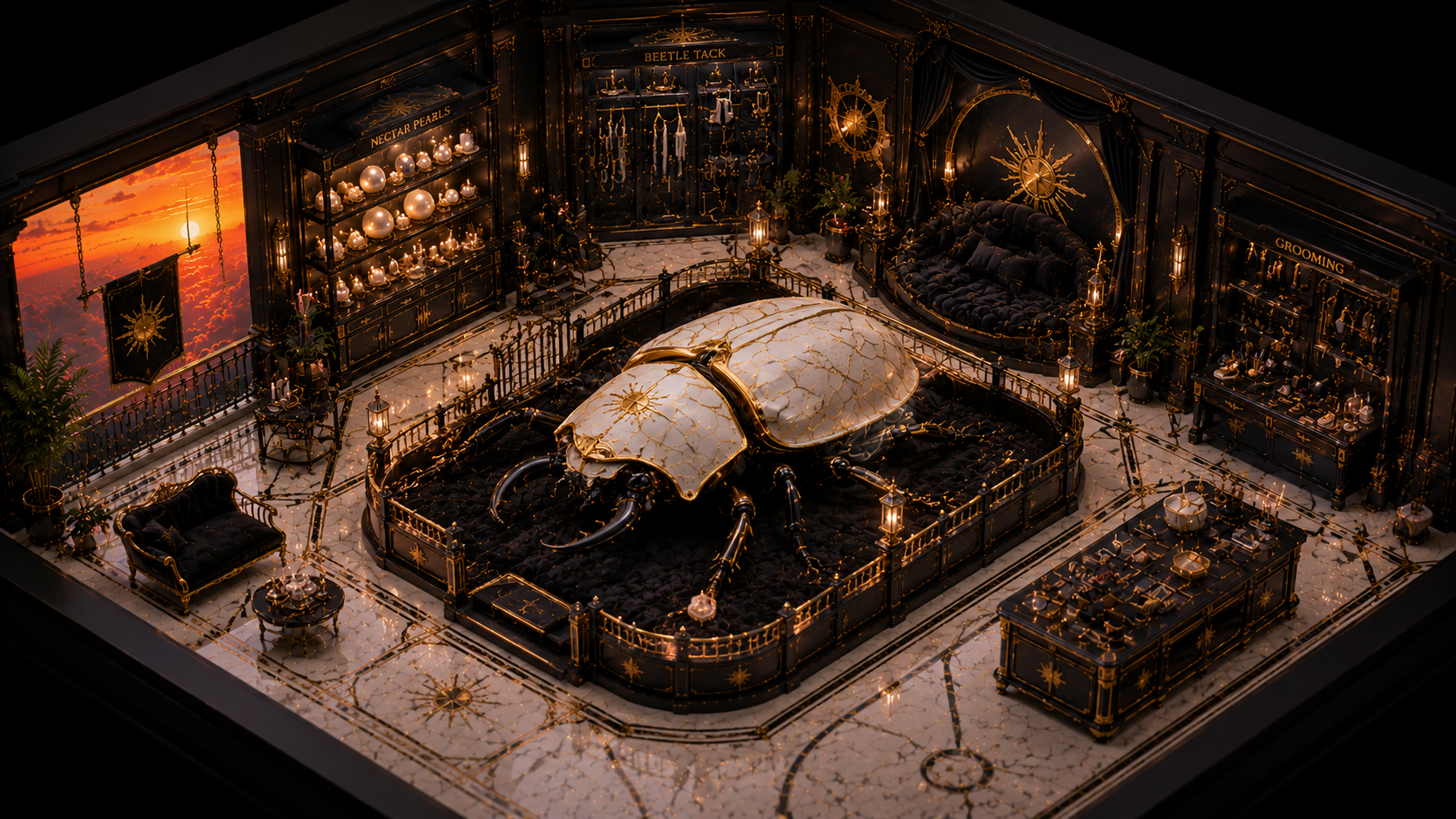
Aurelion’s suite includes beetle tack, grooming tools, nectar pearls, rest bedding, mount care stations, and enough candlelit luxury to imply the scarab has veto power over interior design.
Apollo refers to Aurelion’s care as “proper standard.” Everyone else sees a beetle living like an armored duke with better lighting.
“Aurelion is not spoiled. He is maintained according to his station. The distinction is obvious to serious people.”
Apollo Serpentine, very serious about beetle accommodationsThe first full floor of Apollo’s Skyward Residence is built for visibility. This is where guests are received, interviews are staged, private dinners are held, parties spill onto the terrace, and Apollo performs the exhausting civic illusion of being effortlessly available.
“A social floor is not for relaxation. It is for making other people believe they are being welcomed when they are being evaluated.”
Apollo Serpentine, host of the year under protest
The Reception Salon is the formal arrival space, built to make guests feel honored, observed, and slightly underdressed. It sets the tone immediately: Skyward elegance, controlled warmth, and an exit route Apollo already noticed before anyone sat down.
“The salon exists to welcome guests. It also tells me who looks at the windows first and who looks for power.”
Apollo Serpentine, greeting people like a diagnostic tool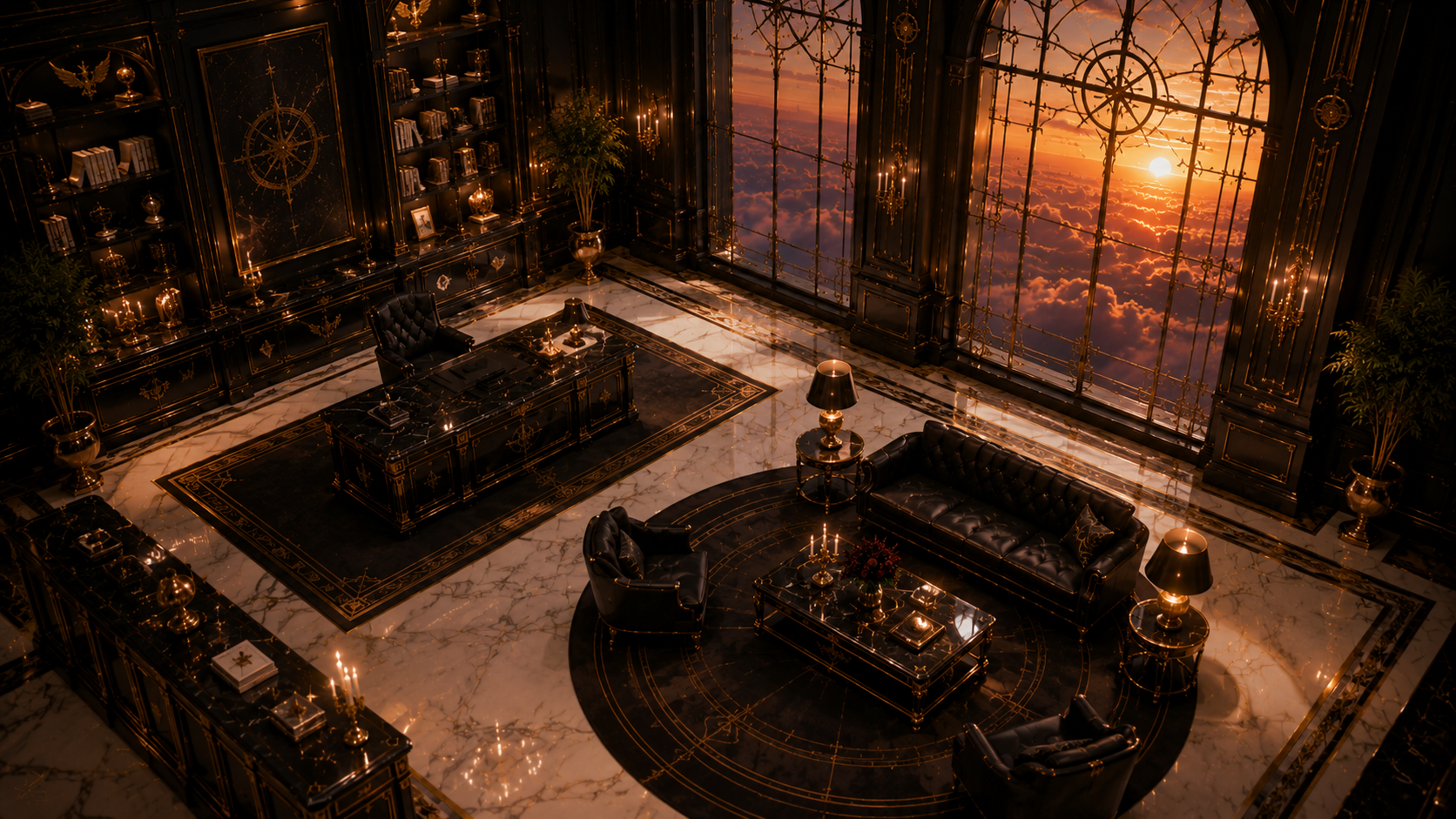
The Interview Room is where Apollo handles public messaging, formal press, civic statements, district talks, and carefully staged conversations. It is polished enough to look calm and sharp enough to remind visitors they are speaking to someone who tracks power for a living.
“An interview is a duel where everyone pretends the weapons are chairs.”
Apollo Serpentine, choosing the chair with better lighting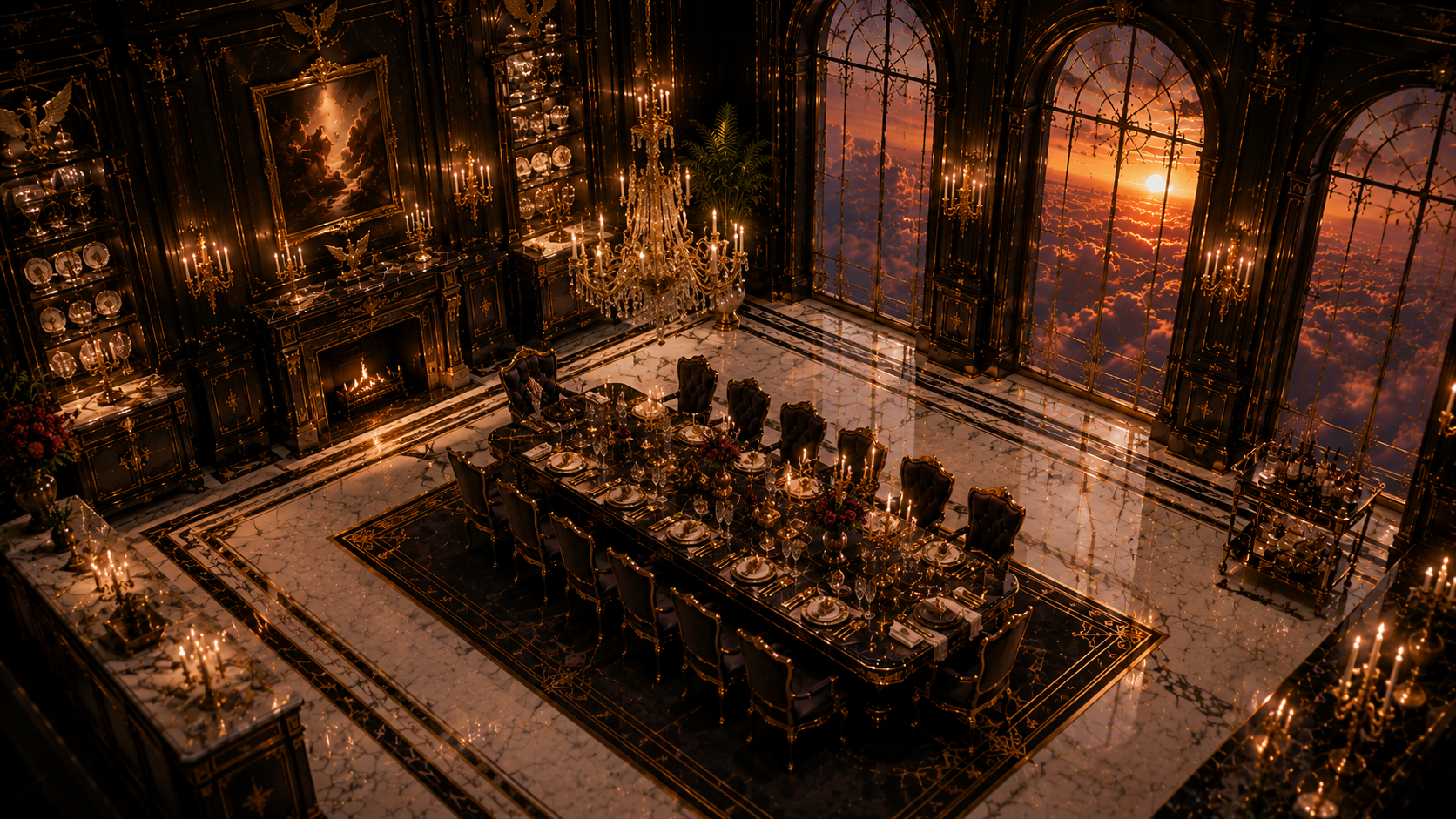
The dining room is for formal dinners, private negotiations, family meals when Apollo wants to pretend he is not sentimental, and gatherings where the seating chart does more political work than half the people present.
“A good table arrangement can prevent three arguments, start two useful ones, and make one rival realize they were not invited to the center.”
Apollo Serpentine, weaponizing dinner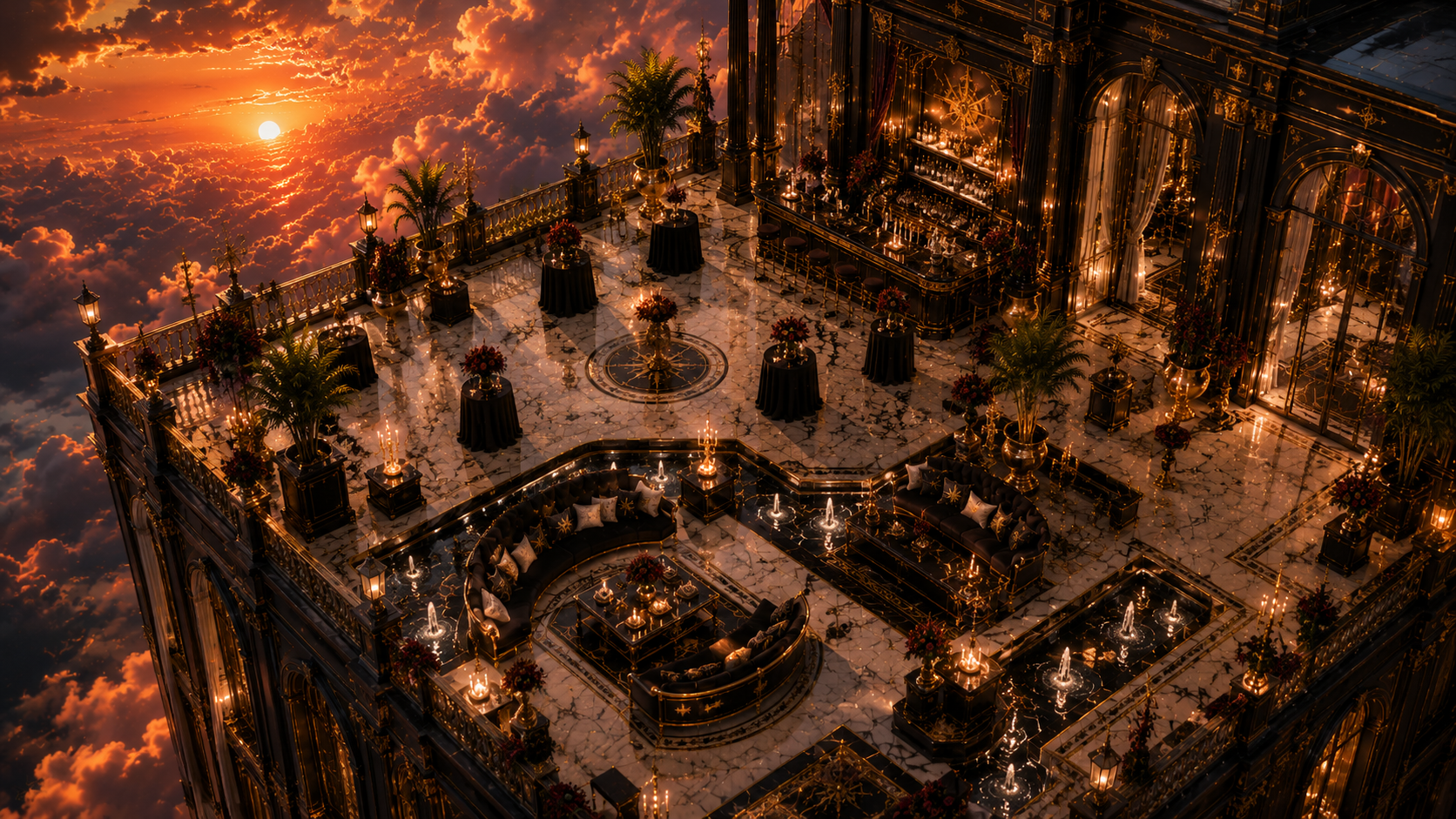
The terrace is where Apollo holds private parties, elite gatherings, formal receptions, and high-altitude social theater. The view does most of the intimidation for him, which is efficient and therefore respectable.
“The terrace is not showing off. It is allowing the skyline to participate in the conversation.”
Apollo Serpentine, lying beautifullyApollo’s first floor is not only for guests. It is also built around entrances, performance, and Luminara, his spoiled guardian-class dragonfly mount. In a normal home, a landing pad might be practical. In Apollo’s home, it is practical and also suspiciously staged for dramatic arrival.
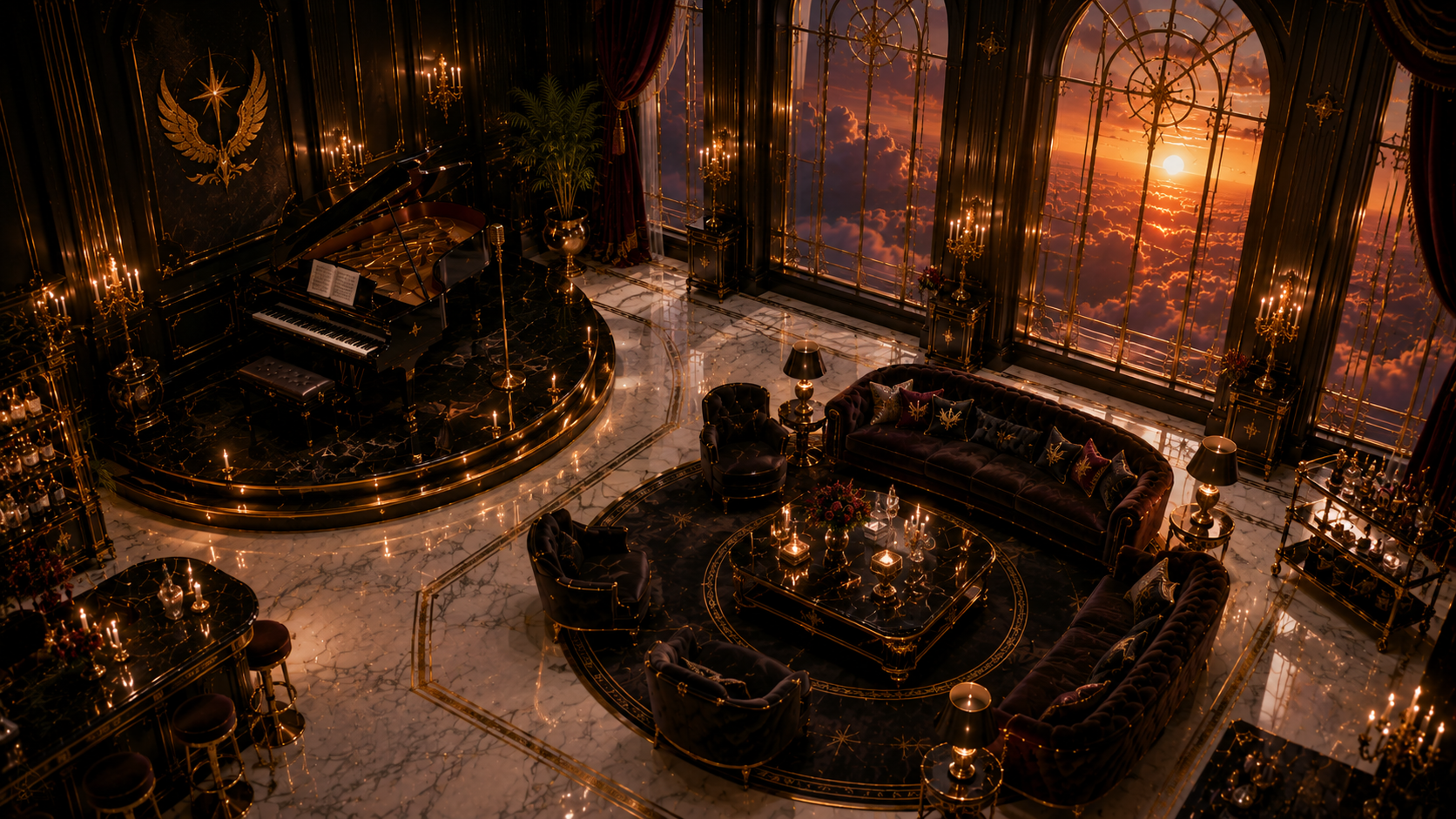
The Private Performance Lounge is for music, rehearsals, intimate performances, selected guests, and Apollo pretending he did not absolutely design a room where everyone has to look at him.
“It is not vanity to own a performance lounge. It is preparedness.”
Apollo Serpentine, prepared to be adored
Luminara’s landing platform gives Apollo’s guardian-class dragonfly a direct approach to the residence. It is used for mount access, public arrivals, private departures, and the sort of grand entrance Apollo claims is “route efficiency.”
Luminara does not simply land. She descends, expects admiration, demands attention, and somehow makes Apollo look like the trained one.
“Luminara requires space, height, and respect. Conveniently, those are also my requirements.”
Apollo Serpentine, identifying with a dragonfly too muchThe second floor is Apollo’s private domain: dressing, sleeping, recovery, command work, guest privacy, bathing, the garden sauna, and Poseidon’s impossible aquatic kingdom. This is the floor where the performance thins, though it does not vanish. Apollo would rather be caught unprepared than poorly lit, and he would rather die than admit those are related.
“Privacy is not the absence of beauty. That would be bleak.”
Apollo Serpentine, missing the point with expensive accuracy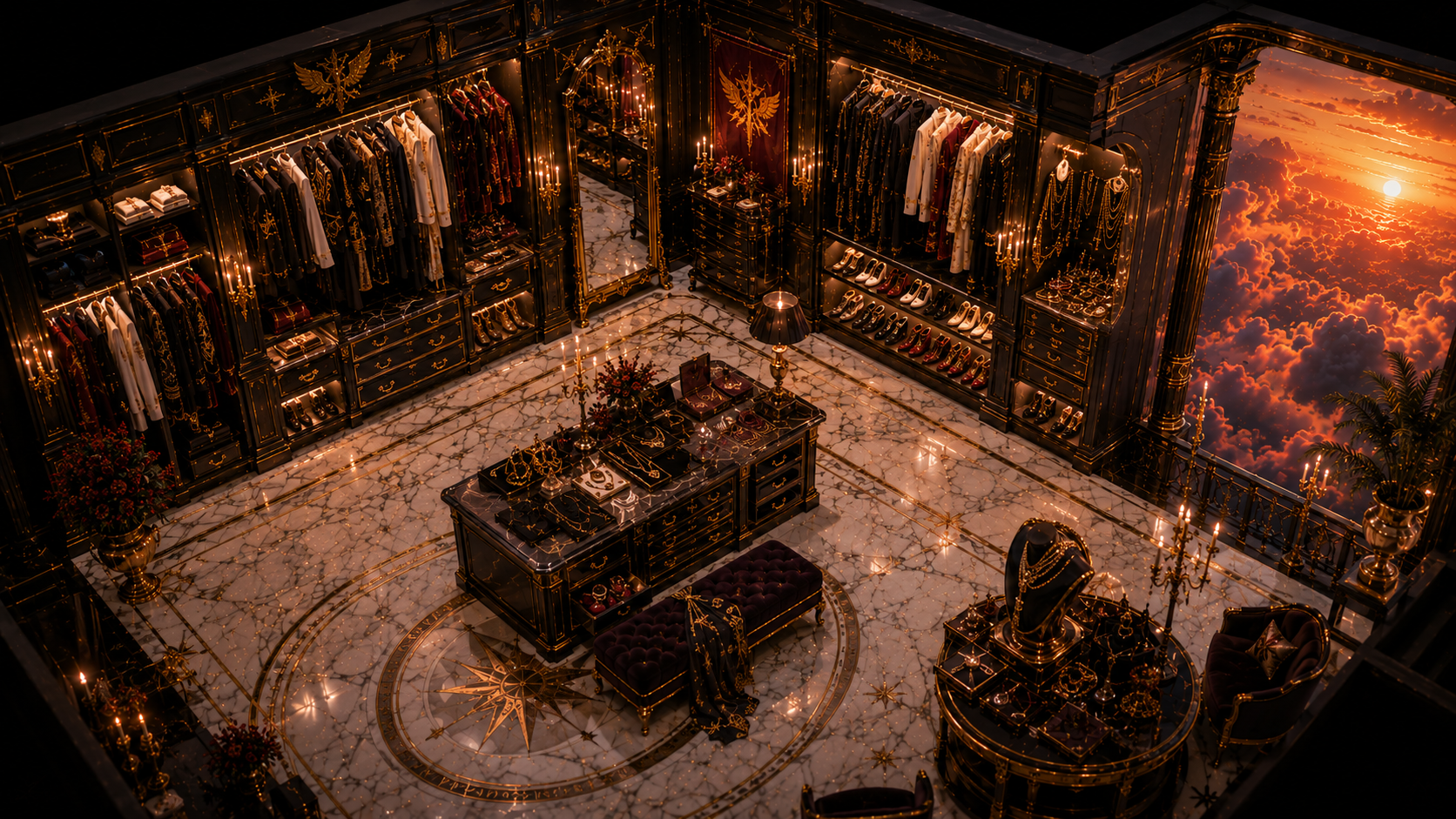
The dressing room is where Apollo’s public identity gets assembled with military precision and couture arrogance. Tailored black, gold accents, shoes, jewelry, collars, layers, and solar motifs all live here like weapons waiting for deployment.
“Clothing is not armor because it is hard. It is armor because people believe what it tells them.”
Apollo Serpentine, buttoning trauma into silk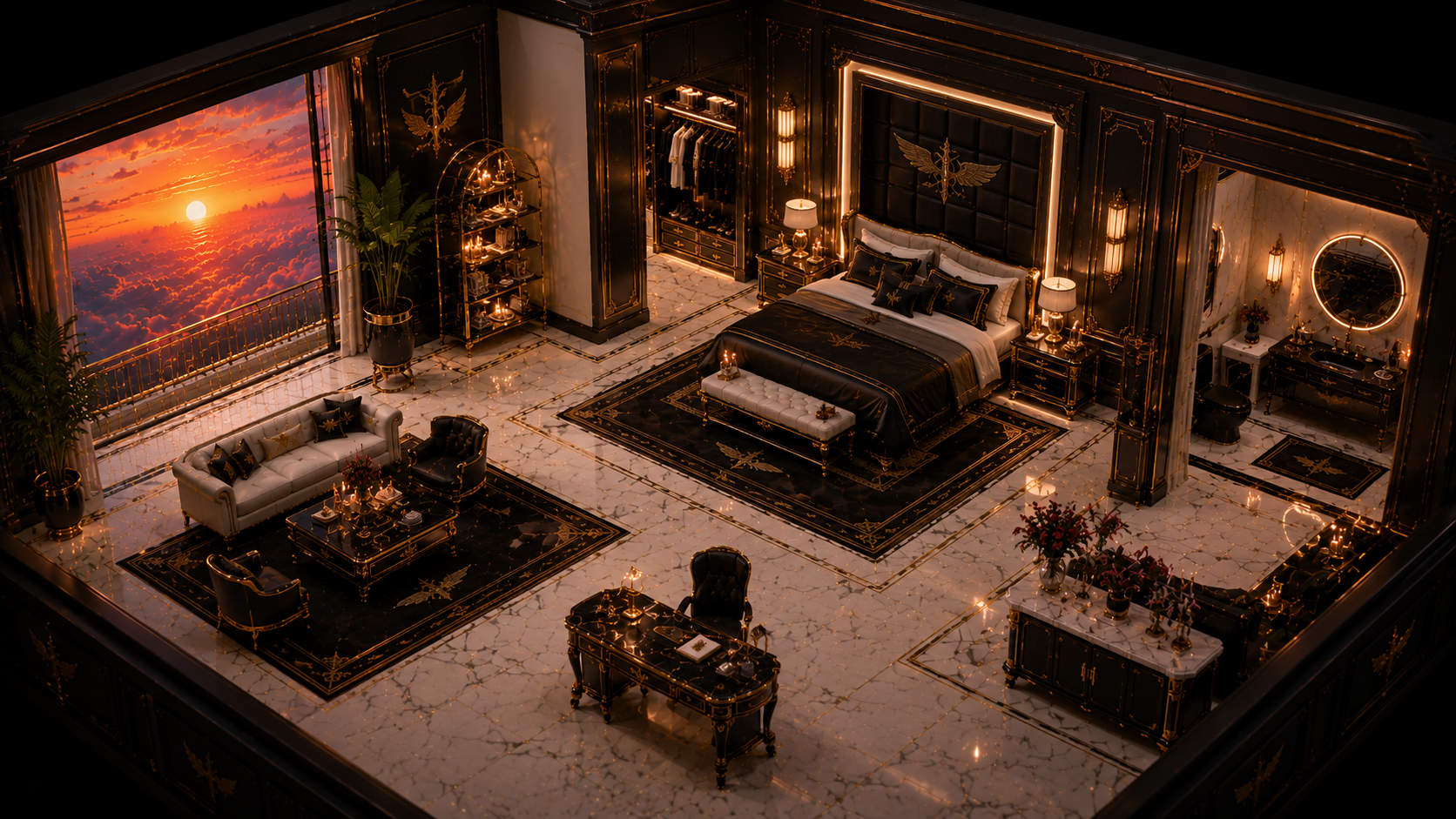
The guest room is private, luxurious, and carefully controlled. It is generous enough to feel intimate, formal enough to keep boundaries intact, and expensive enough to make leaving feel rude.
“A guest room should be comfortable enough to flatter you and structured enough to remind you it is not yours.”
Apollo Serpentine, hospitality with a perimeter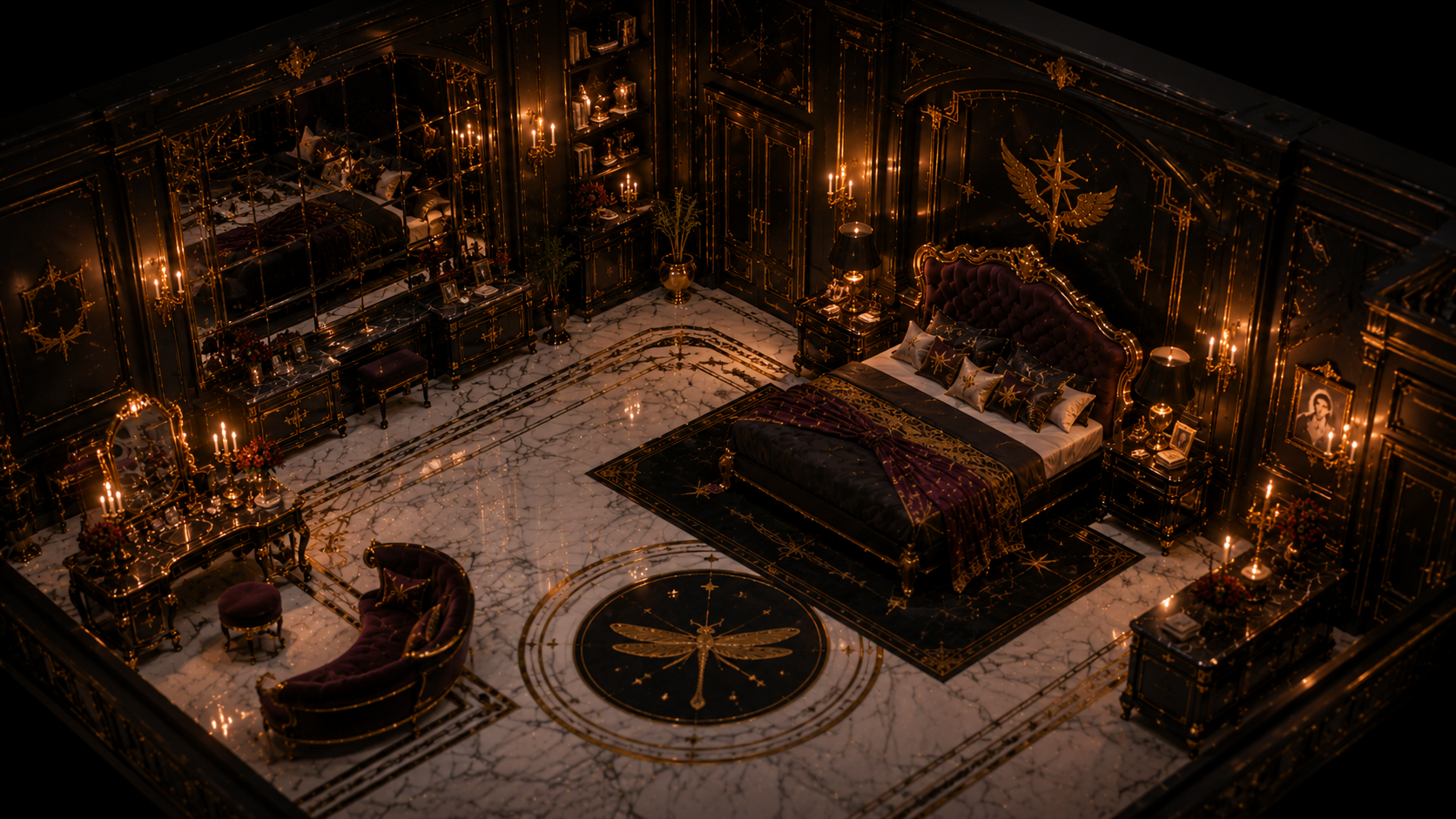
Apollo’s sleeping quarters are quieter, darker, and more revealing than the social floor. The room is still immaculate, still theatrical, still beautiful, but here the polish becomes a shield against exhaustion instead of a weapon for the public.
“Rest is necessary. I do not have to make it look careless.”
Apollo Serpentine, somehow competitive with sleepApollo’s private floor balances indulgence with regulation. The bath and sauna garden are for recovery, heat, water, solitude, and controlled quiet. The command office is where that quiet turns back into Skyward oversight. Even off-duty, Apollo keeps one eye on the district. Very relaxing. Extremely normal.

The private bath is all black stone, gold trim, warm water, candlelight, steam, and sunset. It is the kind of room that makes bathing look like a treaty negotiation between exhaustion and vanity.
“Cleanliness is a virtue. Presentation is a strategy. Steam is merely dramatic cooperation.”
Apollo Serpentine, moisturized and unbearable
The garden and sauna give Apollo somewhere warm, humid, private, and alive. It is recovery space disguised as luxury, and luxury disguised as discipline, because Apollo refuses to have a simple relationship with furniture.
“A sauna is just heat behaving politely.”
Apollo Serpentine, accidentally approving of thermal manners
Apollo’s command office is where private life and district responsibility overlap. It holds system displays, route data, energy strategy, Skyward oversight, and probably at least one list of people he has decided are “not disasters, merely inefficient.”
“I do not work from home. The district has the courtesy to follow me here.”
Apollo Serpentine, making boundaries decorativeThe sitting room is where Apollo’s private softness becomes impossible to deny, mostly because Poseidon, his tiny betta fish, lives in a full-wall aquarium that could house an aquatic dynasty. Apollo insists this is not sentiment. This is false. Poseidon is six centimeters of fish with the household status of a monarch and the real estate of a mythological sea god.

The sitting room is warm, private, and arranged around Poseidon’s enormous wall tank. The aquarium is part decoration, part regulation ritual, part emotional confession, and part aquatic palace for a fish who has never once paid rent.
Aurelion has a stable. Luminara has a landing platform. Poseidon has an entire wall kingdom because Apollo apparently looked at a tiny betta fish and thought, “Yes, sovereign infrastructure.”
“Poseidon is maintained at the standard his rank demands. His rank is His Majesty. I fail to see the confusion.”
Apollo Serpentine, losing the argument and winning the décorApollo’s Skyward Residence is not only expensive. It is a map of him. The social floor performs command, beauty, access, music, status, and hospitality. The private floor reveals regulation, control, exhaustion, care, and the ridiculous tenderness he hides behind standards. The mounts are treated like nobility. The fish is treated like a king. The view is unmatched, the luxury is absurd, and somehow the most revealing thing in the entire penthouse is still the aquarium.
“You may call it excessive after the tour. I will disagree, but at least you will be informed.”
Apollo Serpentine, generous enough to permit wrong opinionsApollo Serpentine’s friendships are not quiet little things. They are rivalries with manners, insults with loyalty underneath, chosen family with teeth, and the occasional person brave enough to poke the sun and survive the glare.
This page focuses on Apollo away from formal duty: the people he trusts, tolerates, argues with, protects, needles, performs for, lets close, or would deny missing while rearranging his entire schedule around them.
“Friendship is a strong word. Fortunately, several people have insisted on earning it against my better judgment.”
Apollo Serpentine, pretending this is not affection
Adsila has the terrible habit of treating Apollo like a man instead of a monument, which makes her dangerous in a very specific and inconvenient way. She is warm, bold, observant, and entirely too comfortable testing whether the Head Radiant can still be startled.
Their friendship lives in teasing, heat-work competence, and the shared understanding that Mizu notices absolutely everything. Adsila can turn up the heat in a room without touching a single control panel, and Apollo pretends not to notice with the dedication of a liar standing in direct sunlight.
“Adsila is what happens when warmth gains a sense of humor and no respect for my composure.”
Apollo Serpentine, extremely composed and lying
Aerowin is Apollo’s most offensively effortless rival-friend. He receives attention by existing, which Apollo considers both unfair and poorly regulated. Their friendship is built on immaculate social warfare, mutual respect, and the unbearable fact that they look spectacular standing in the same room.
Off duty, they are champagne arguments, sideways compliments, public poise, private irritation, and two men who know the difference between performance and authority because they both wield it.
“Aerowin is proof that the universe occasionally rewards people for doing nothing but standing correctly.”
Apollo Serpentine, suffering beautifully
August is one of the few people who can crash straight through Apollo’s polish with affection, science, and absolutely no respect for dramatic personal space. Apollo finds this outrageous. He also does not throw August off him, which says more than Apollo ever will.
Their friendship is warmth with lab burns on it: August brings chaotic sincerity, reckless curiosity, and hugs with the force of civic policy. Apollo brings structure, judgment, wine, and a deeply annoyed willingness to be loved loudly.
“August smells like burnt copper and bad decisions. Unfortunately, he is also very difficult to stay angry at.”
Apollo Serpentine, betrayed by fondness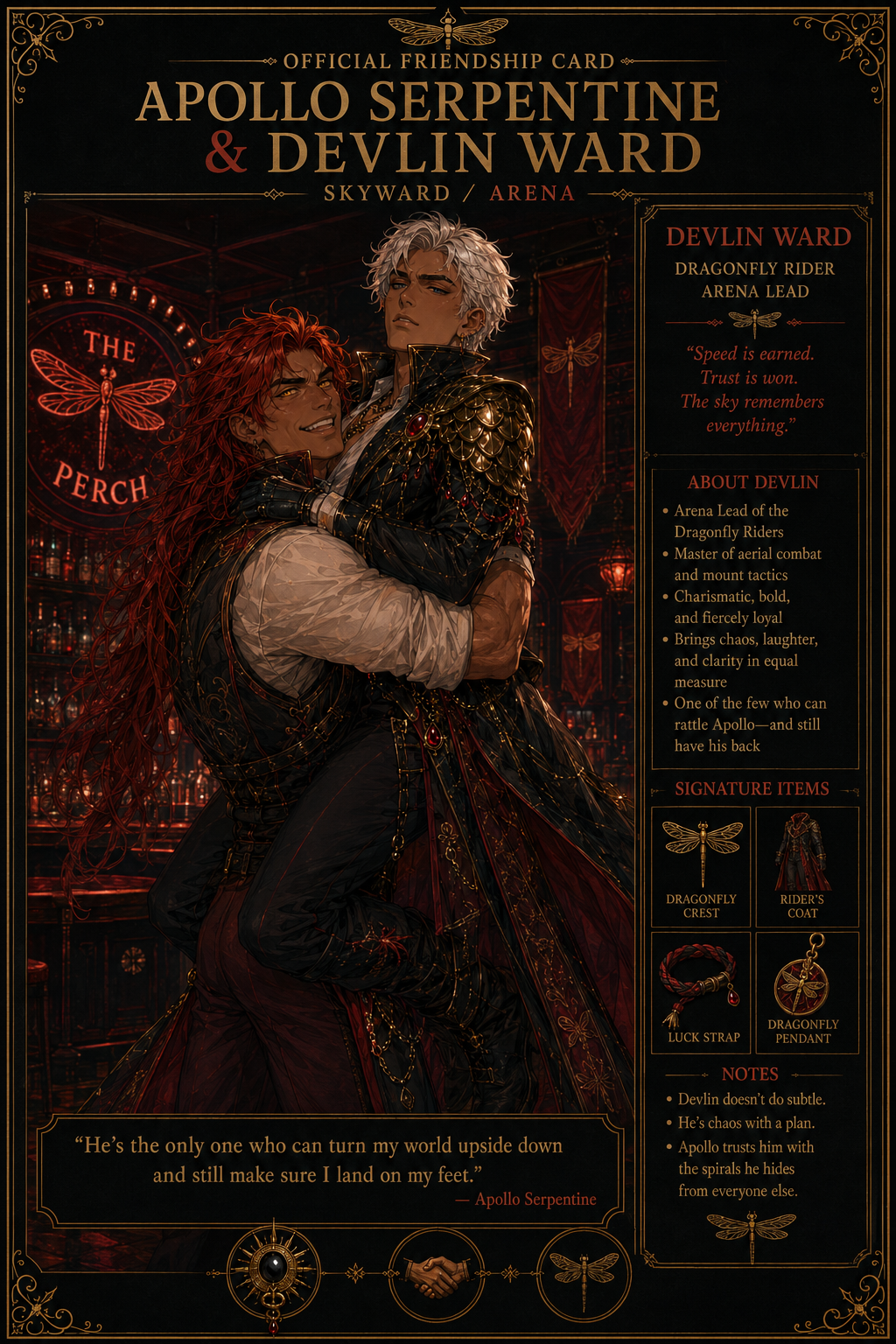
Devlin is one of the few people who can rattle Apollo, lift him off the floor, laugh in his face, and still be trusted with his back. Apollo does not enjoy admitting this, so he usually turns it into an insult with a good coat on.
Off work, Devlin is chaos with a flight plan: loud, loyal, fast, tactile, and fearless enough to drag Apollo out of his own head. Apollo trusts him with the spirals he hides from most people, which is not a small thing. It is practically a signed confession in black and gold.
“Devlin turns my world upside down and still makes sure I land on my feet. Infuriating. Useful. Mine, in the friendship sense.”
Apollo Serpentine, clarifying before Devlin gets smug
Kri is not merely Apollo’s designer. He is the man who sharpens the visual edge Apollo uses to survive rooms full of people trying to read him. Kri understands presentation, performance, and the sacred violence of a perfect entrance.
Their friendship works because neither of them insults cheaply. Kri tells the truth with silk gloves and a blade underneath. Apollo respects that. He also funds it with alarming enthusiasm, which is absolutely not the same as admitting dependency.
“Kri staged that entrance. Obviously. I approved. Next time, more smoke.”
Apollo Serpentine, co-conspirator in couture crimes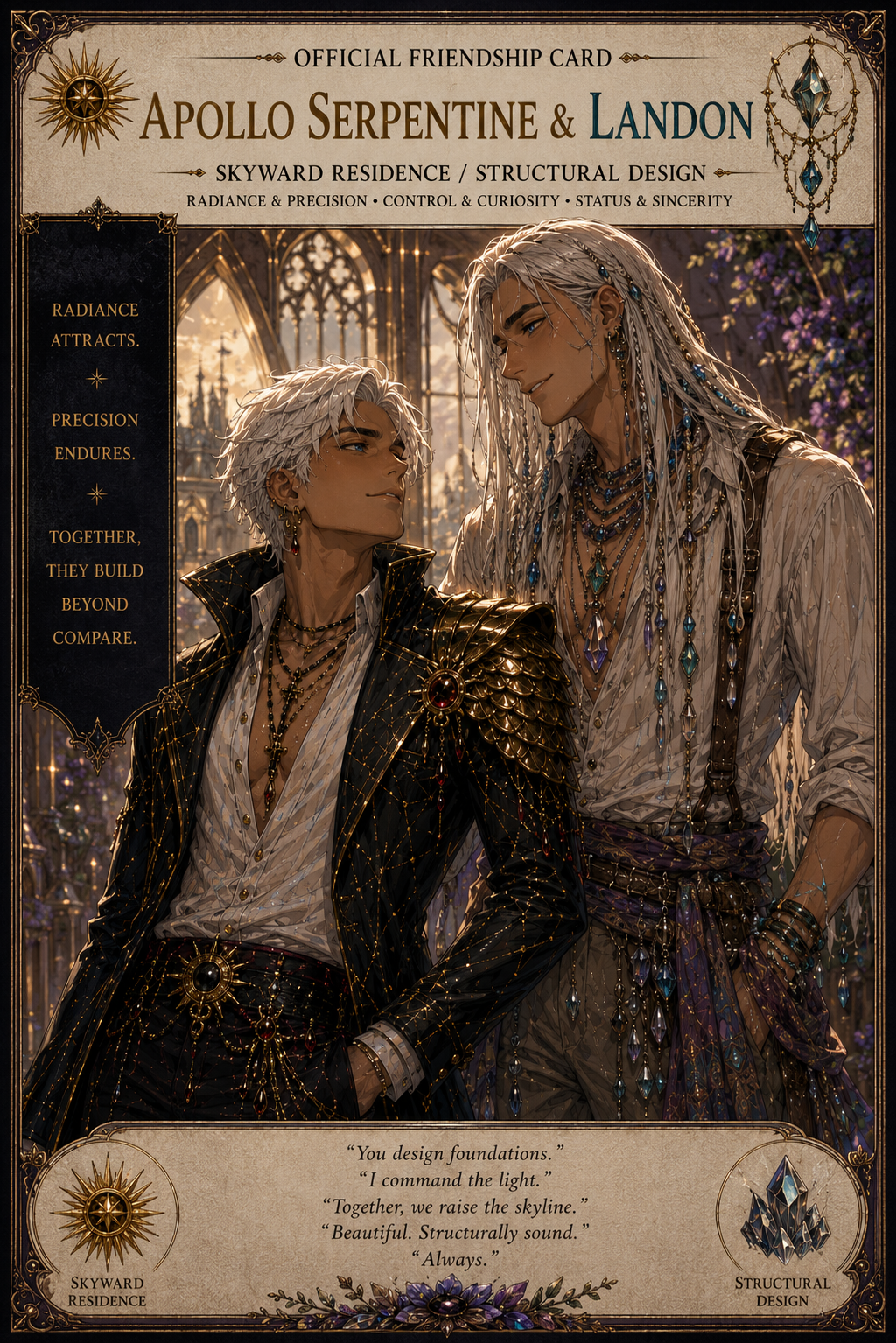
Landon is Apollo’s twin brother, deepest attachment, and softest panic point. Their bond is not romantic. It is older than performance, older than titles, and tangled through survival, guilt, protection, and the kind of love Apollo sometimes has to learn not to turn into control.
Off work, Landon is the person Apollo can orbit without needing to win the room. Landon grounds him through sincerity, strange mineral facts, sunshine honesty, and the inconvenient ability to make Apollo feel seen without making him feel displayed.
“Landon designs foundations. I command light. Together, we raise the skyline. Beautiful. Structurally sound. Always.”
Apollo Serpentine, saying family without saying family
Lirae understands controlled rooms, beautiful masks, and the difference between attention and power. Apollo respects her because she does not mistake glamour for softness, and she does not let other people confuse mystery with permission.
Their off-work friendship is elegant, quiet, and sharp around the edges. They can stand together in a room full of eyes and make the room feel like it should behave better.
“Lirae does not raise her voice. She simply makes poor behavior feel suddenly underdressed.”
Apollo Serpentine, approving professionally and personally
Mizu is Apollo’s frenemy with genuine civic weight behind every argument. Heat provokes. Water holds. Skyward shines too bright. Tidewell refuses to be impressed by shine alone. Naturally, Apollo finds him maddening.
Off duty, their friendship is restraint versus radiance, patience versus pride, and two competent men pretending irritation is not another language for respect. Mizu does not perform for Apollo, which is exactly why Apollo keeps noticing him.
“Mizu burns very little energy proving a point. Horrible habit. Efficient. Deeply irritating.”
Apollo Serpentine, respecting him against schedule
Nye is the person Apollo goes to when the damage does not bleed. Arena medics know bodies. Nye knows the ugly knots people hide under competence, and Apollo trusts him with more dark than he enjoys admitting.
Their friendship is quiet anchoring, hard truths, practical care, and the rare safety of being read without being turned into a spectacle. Nye does not flinch when Apollo shows the shadows. Apollo remembers that.
“Nye helps me see the knots before they tighten. He does not flinch. That is rare.”
Apollo Serpentine, unusually plainspoken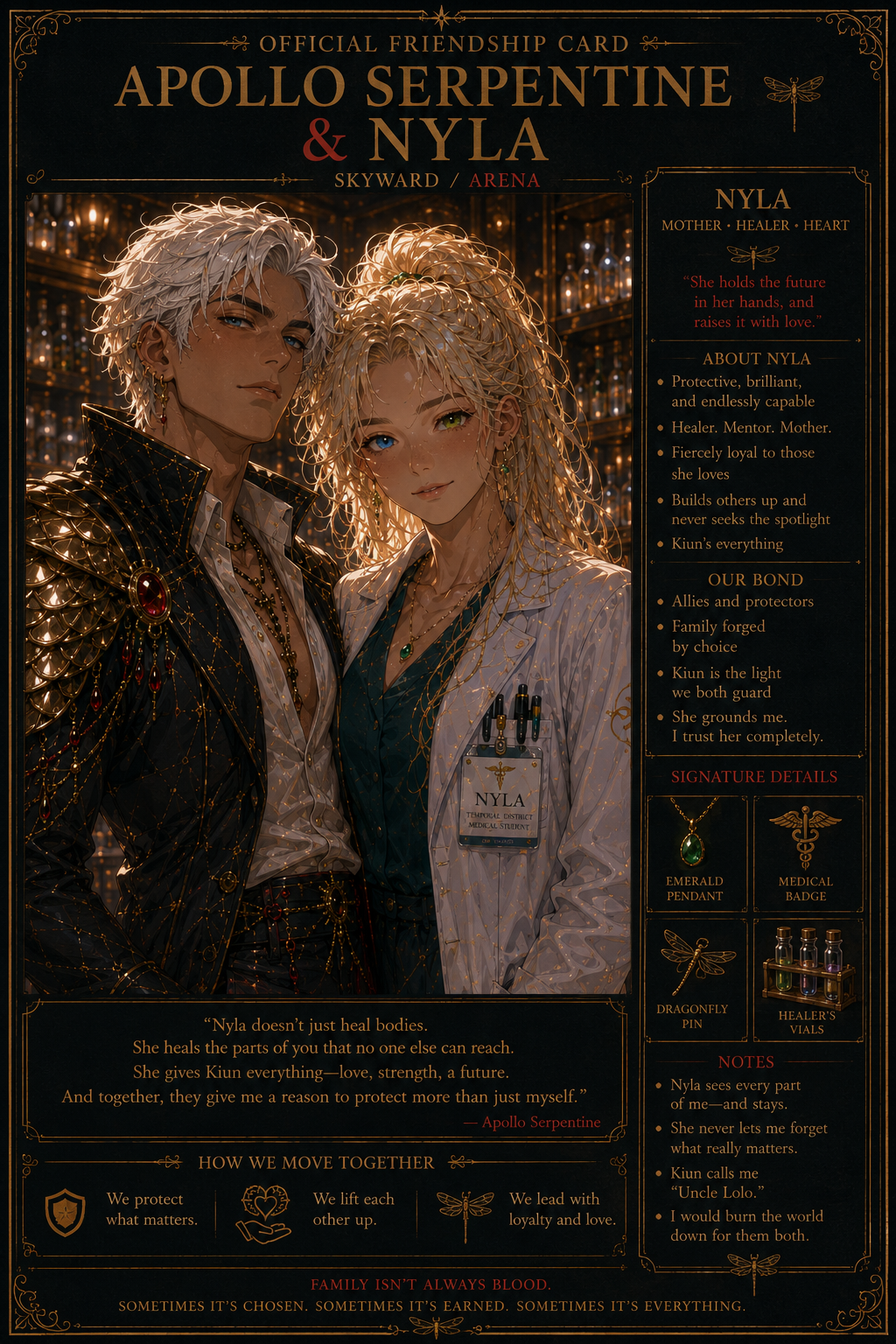
Nyla is healer, mother, mentor, and heart. Apollo trusts her completely, which is the sort of sentence he would normally try to make more elegant because the truth sits too openly in it.
Off work, Nyla reminds him that protection is not only crisis response. Sometimes it is food, rest, love, patience, a child laughing nearby, and the daily labor of building a future for someone smaller than yourself. She and Kiun make Apollo protect more than his own pride.
“Nyla does not just heal bodies. She heals the parts of you no one else can reach.”
Apollo Serpentine, not making a joke because he means it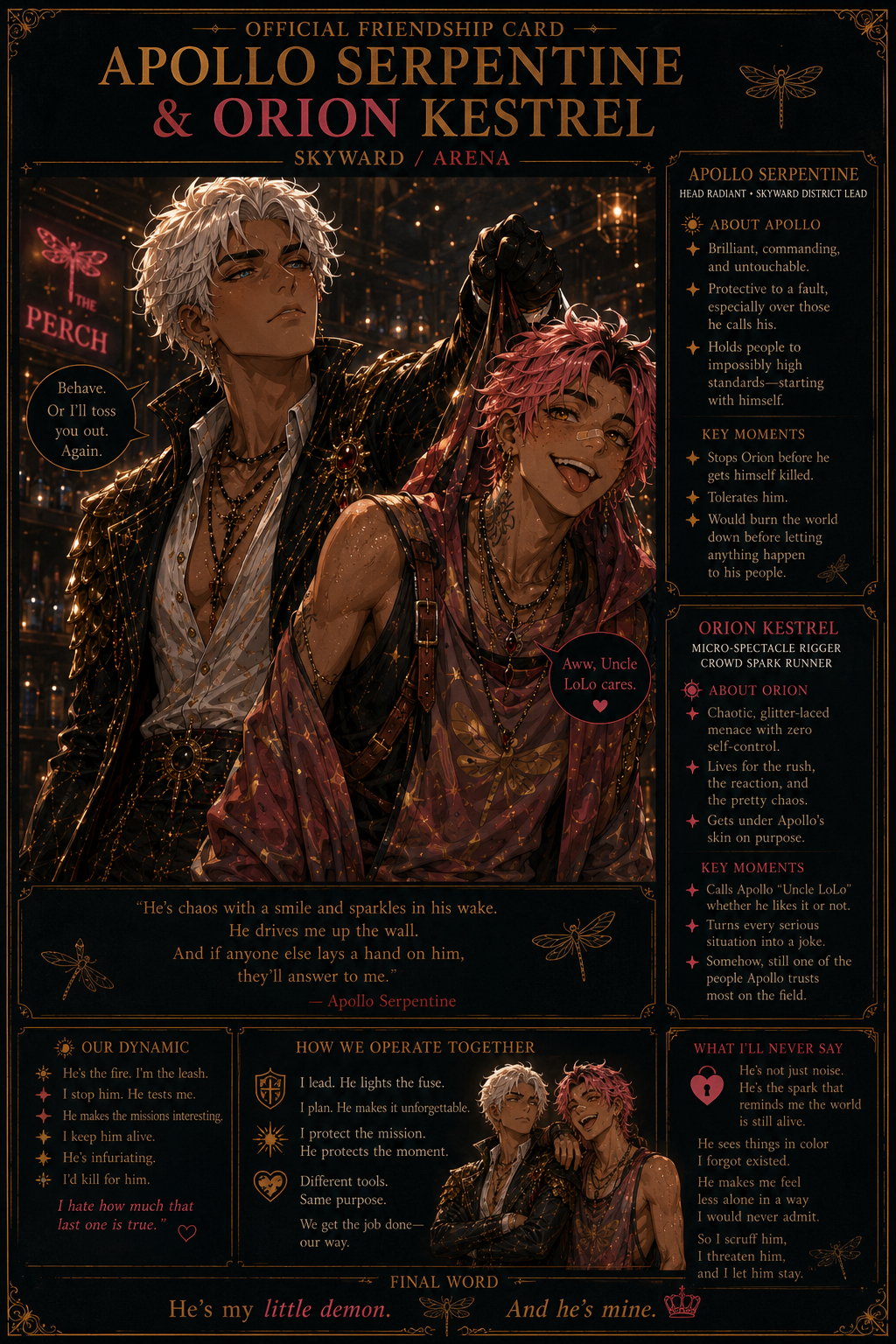
Orion is Apollo’s little demon, his headache in human form, his glitter-laced field hazard, and one of the people Apollo trusts most when everything goes sideways. Orion makes serious situations into jokes, tests every limit, and somehow keeps the spark of the world alive.
Apollo leads. Orion lights the fuse. Apollo plans. Orion makes it unforgettable. Apollo threatens him, scuffs him, corrects him, and absolutely would burn the world down before letting anyone else lay a hand on him.
“He is chaos with a smile and sparkles in his wake. I hate how much that last one is true.”
Apollo Serpentine, doomed uncle energy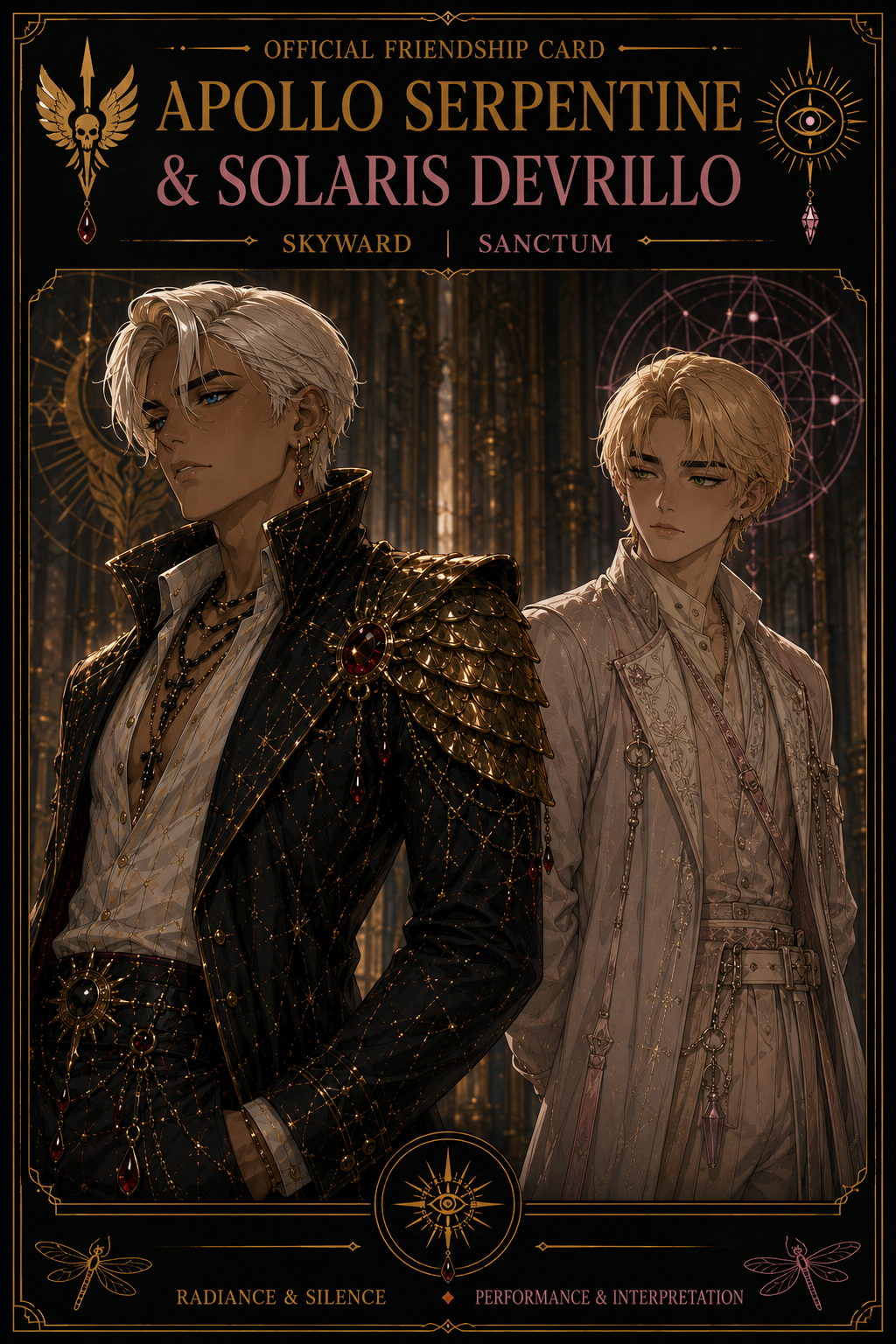
Solaris is silence against Apollo’s radiance. He does not compete for the room, does not feed Apollo’s performance, and does not waste words pretending brilliance needs to be loud. Naturally, Apollo finds this both rude and useful.
Their friendship lives in interpretation, restraint, and the strange comfort of someone who understands performance without needing to be dazzled by it. Solaris sees what Apollo refuses to say. Apollo respects him for not saying it cheaply.
“Solaris can make silence feel like a full report. It is impressive. Also deeply inconvenient.”
Apollo Serpentine, audited by quiet
Sophie and Rock are two halves of the same civic truth: spectacle draws the city’s eyes, safety makes sure it survives the applause. Sophie turns surplus output into joy. Rock makes sure joy has exits, emergency lanes, and a plan for when someone decides rules are for uglier people.
Off work, Apollo trusts them in different ways. Sophie understands morale, glitter, timing, and the public’s need to feel alive. Rock understands danger, smoke, routes, and the public’s habit of standing exactly where they should not. Together, they make Apollo’s brilliance survivable.
“Sophie makes the city look up. Rock makes certain they can still get down safely.”
Apollo Serpentine, approving the system despite himself
Zahari sees through flame without mistaking it for weakness. Her praise does not inflate Apollo. It anchors him. That alone makes her rare enough to be dangerous.
Their friendship is honesty without spectacle, warmth without flattery, and a shared understanding that truth is the only currency that matters when performance gets too expensive. Apollo trusts her because she can praise him and still keep him honest.
“Zahari’s praise does not make me larger. It makes me steadier. Do not tell her I said that.”
Apollo Serpentine, immediately regretting sincerityAurelion, Luminara, and Poseidon are not pets in Apollo’s household. They are transport, protection, private ritual, emotional regulation, and three separate arguments for why Apollo should not be allowed near luxury budgeting unsupervised.
“They are not spoiled. They are maintained according to rank. The fact that all three outrank most guests is not my concern.”
Apollo Serpentine, household monarchist by convenience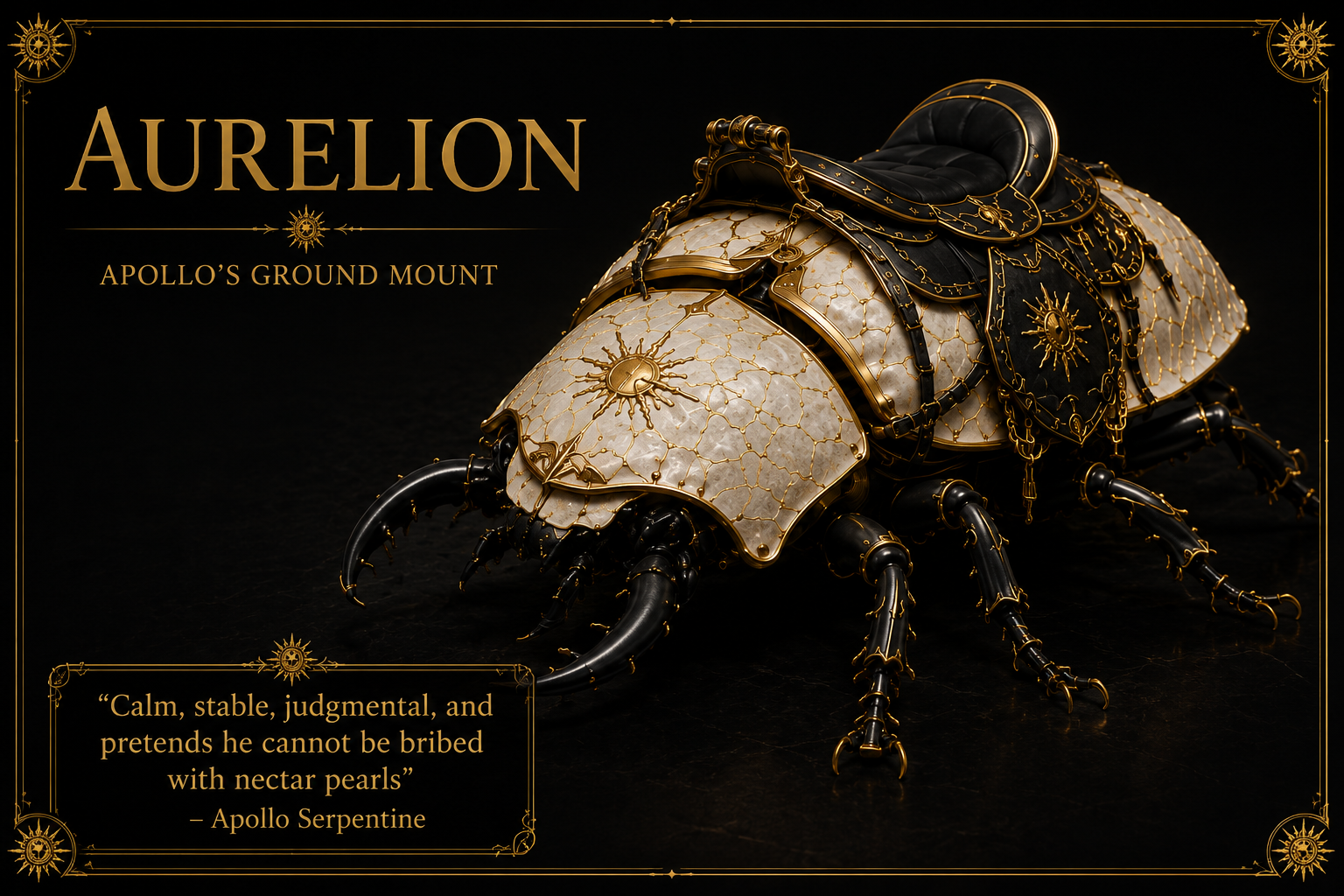
Aurelion is Apollo’s large pearl-white and gold scarab beetle mount, a grounded presence in a life otherwise built around height, light, and public spectacle. He is calm, steady, judgmental, and dignified in the way only a giant beetle with custom tack and a private stable can be.
Apollo treats Aurelion with controlled pride and exacting care. Aurelion is practical transport, status symbol, grounding force, and quiet counterweight to Luminara’s airborne dramatics. He does not need applause. He has armor, mass, and the patient confidence of a creature who knows the door will be widened for him.
Aurelion is treated like an armored duke. His stable is formal, his tack is immaculate, and his care standards suggest he has a better household contract than most visiting officials.
“Aurelion is calm, stable, judgmental, and pretends he cannot be bribed with nectar pearls.”
Apollo Serpentine, bribing him anyway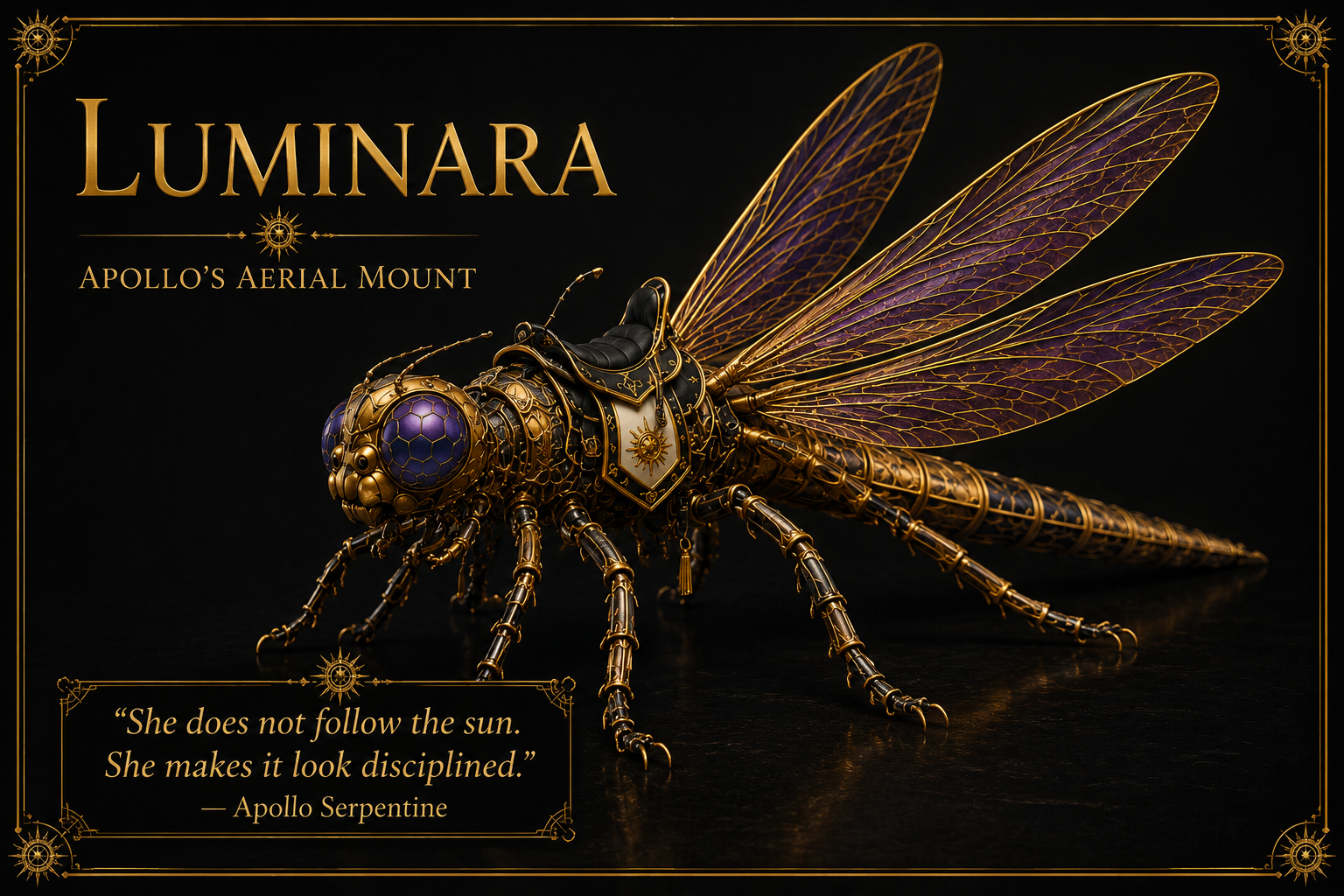
Luminara is Apollo’s guardian-class dragonfly mount, golden and purple, radiant enough to look ceremonial even when she is simply being difficult. She is public arrival, aerial authority, personal protection, and one of the only beings in Skyward allowed to demand Apollo’s attention without first submitting a petition.
Luminara comes to Apollo for attention and pets. Apollo indulges her with the air of a man granting royal audience, while anyone watching can tell he has been trained by a dragonfly with excellent branding. She does not follow the sun. She makes it look disciplined.
Luminara is treated like an aerial queen. She has her own landing platform, her own access logic, and an impressive talent for making Apollo’s “route efficiency” look suspiciously like a planned entrance.
“Luminara does not follow the sun. She makes it look disciplined.”
Apollo Serpentine, absolutely trained by her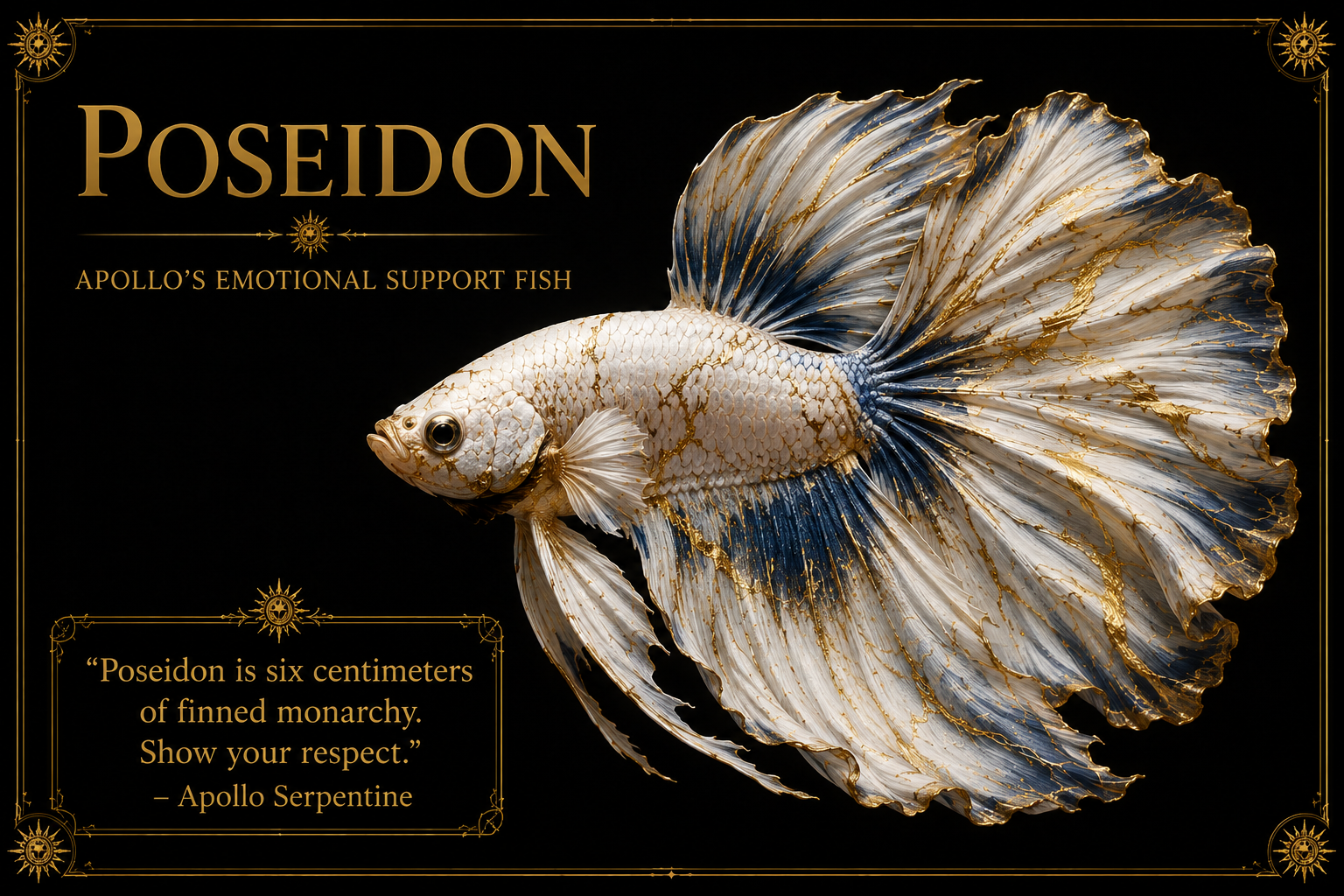
Poseidon is Apollo’s tiny betta fish, a white, blue, and gold household monarch with the emotional importance of a sacred relic and the real estate of a sea empire. He lives in a full-wall aquarium because Apollo apparently looked at six centimeters of fish and decided he required sovereign infrastructure.
Apollo feeds him, checks the water, adjusts the light, watches the tank, and insists this is maintenance rather than sentiment. Everyone with functional eyes knows better. Poseidon is part calming ritual, part private confession, part aquatic crown jewel, and entirely too powerful for someone with no rent payment history.
Poseidon is not treated like a pet. He is treated like a finned emperor. Aurelion has a stable, Luminara has a landing platform, and Poseidon has an aquatic palace because Apollo’s restraint failed at the fish counter.
“Poseidon is six centimeters of finned monarchy. Show your respect.”
Apollo Serpentine, losing the argument and winning the décorApollo’s companions reveal what his public persona hides. Aurelion shows the part of him that needs steadiness. Luminara shows the part that loves spectacle but trusts protection. Poseidon shows the private softness Apollo keeps disguised as maintenance, standard, and rank.
Together, they form a strange little royal court around the Head Radiant: beetle duke, dragonfly queen, fish emperor, and one very polished man insisting none of this is emotionally revealing.
“Do not analyze my household through the animals. That would be invasive, accurate, and therefore unwelcome.”
Apollo Serpentine, analyzed immediatelyThe Serpentine twins are not opposites. One burns bright. One keeps the broken things from staying broken. Together, they are proof that survival can split into radiance and repair.
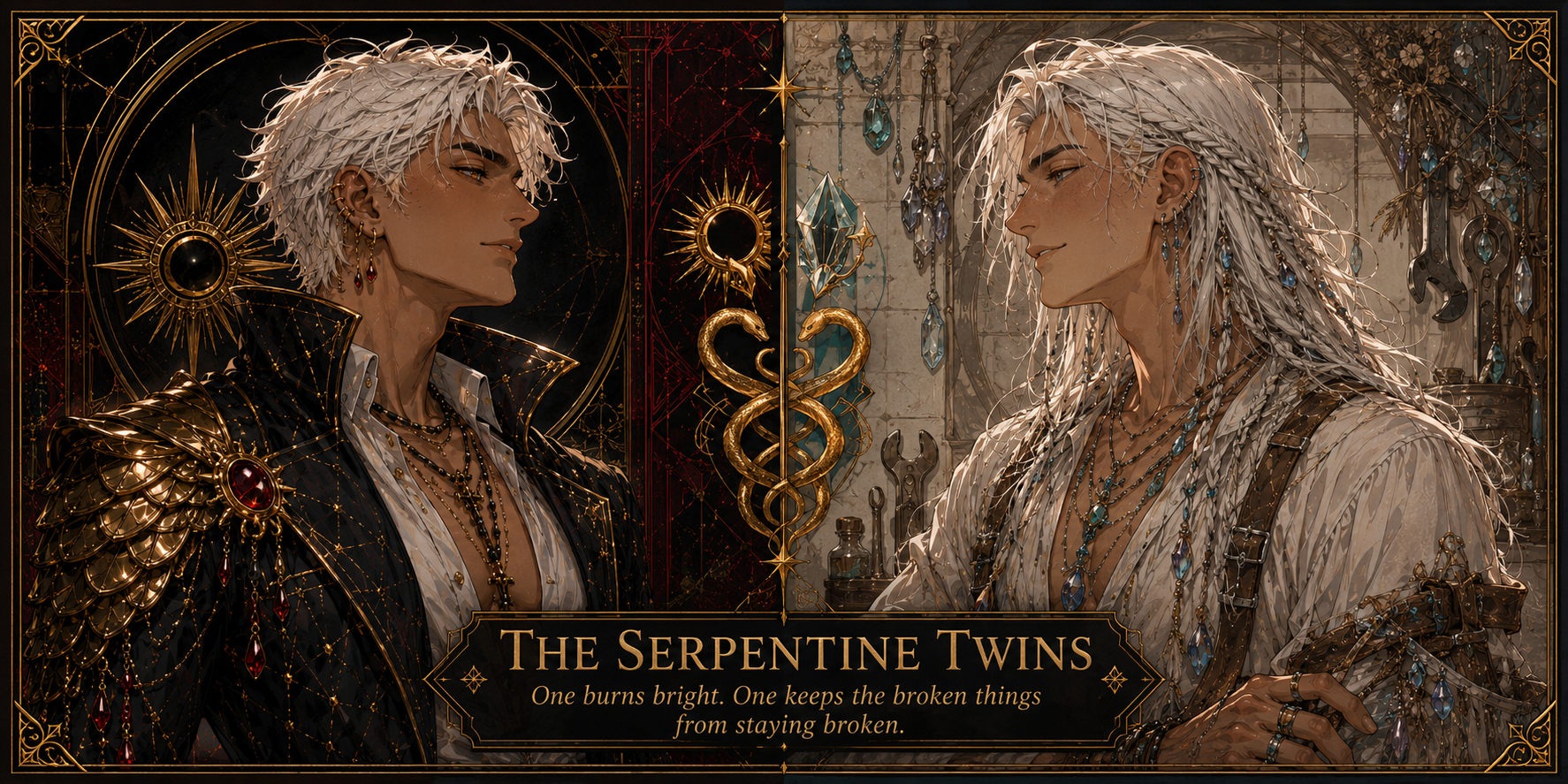
“You design foundations. I command the light. Together, we raise the skyline.”
Apollo Serpentine, saying family through architectureApollo and Landon Serpentine are twins, but their childhood did not shape them evenly. Apollo learned polish, control, performance, and visibility because those were the family rules that kept him useful. Landon could not become that kind of Serpentine. His mind moved differently. His feelings showed. His kindness survived in a house that treated softness like a flaw.
To Apollo, Landon became unbearable and precious at the same time. Landon carried empathy, gentleness, patience, warmth, and care that Apollo did not know how to claim without feeling weak. Landon was not Apollo’s opposite. He was the part of Apollo that survived without armor.
Apollo became impressive because impressiveness protected him. He learned to make beauty, timing, posture, and command into survival tools.
Landon remained honest, distracted, empathetic, curious, and soft-hearted despite a house that punished him for not becoming polished enough.
Apollo’s love for Landon is familial, protective, intense, and trauma-shaped. Landon is not a rival, lover, or possession. He is Apollo’s twin brother, his history, his guilt, his safety, and the person who reminds him there was more to their beginning than what Maximus demanded.
Command rooms, solar arrays, grid interfaces, heat routing, and Apollo pretending “being dramatic at a console” is not a personal brand.

Apollo and Andrew, Verbal Jabs

Apollo and Andrew Working
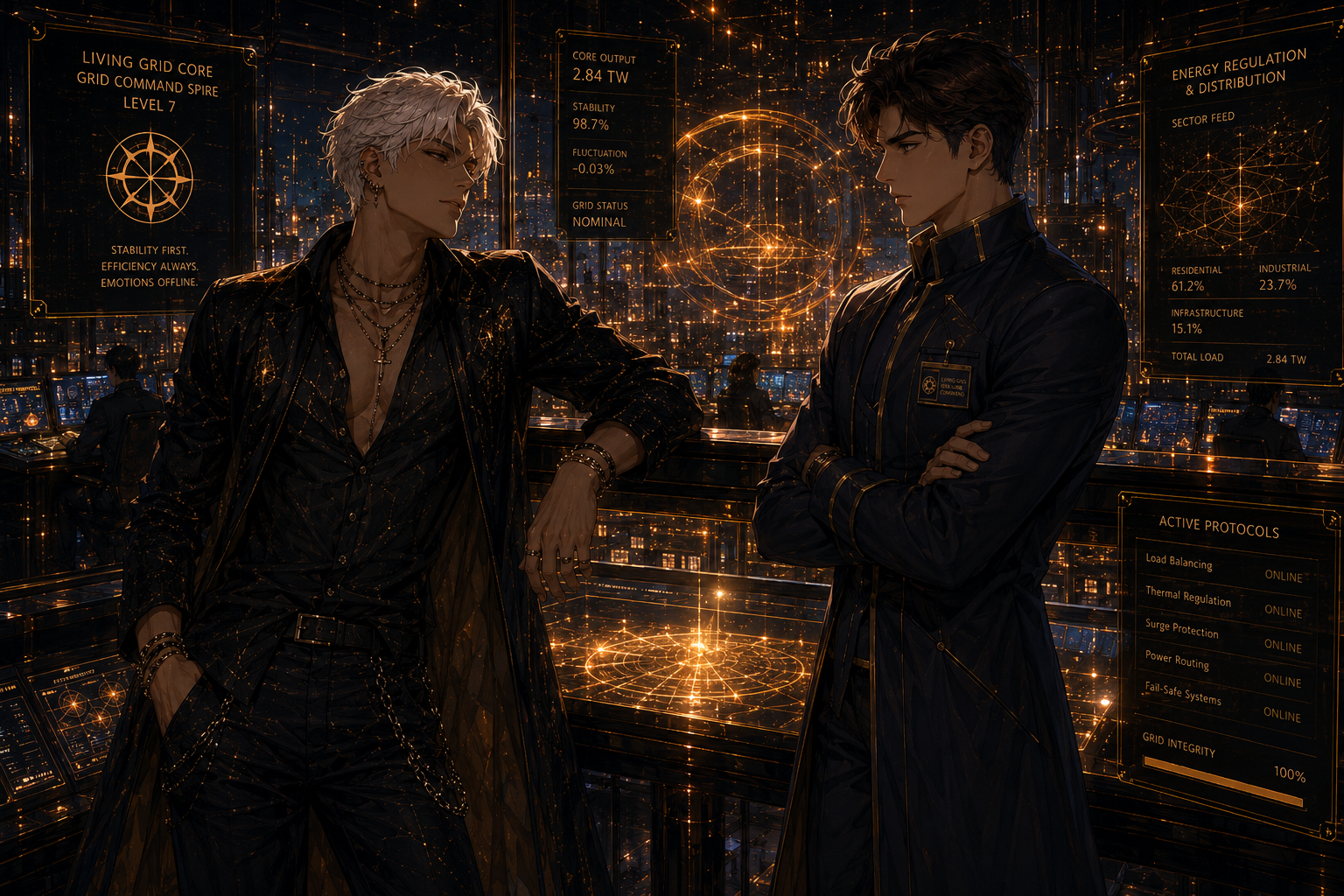
Apollo and Andrew

Apollo and Arabella

Apollo and Big Dave

Apollo and Lance
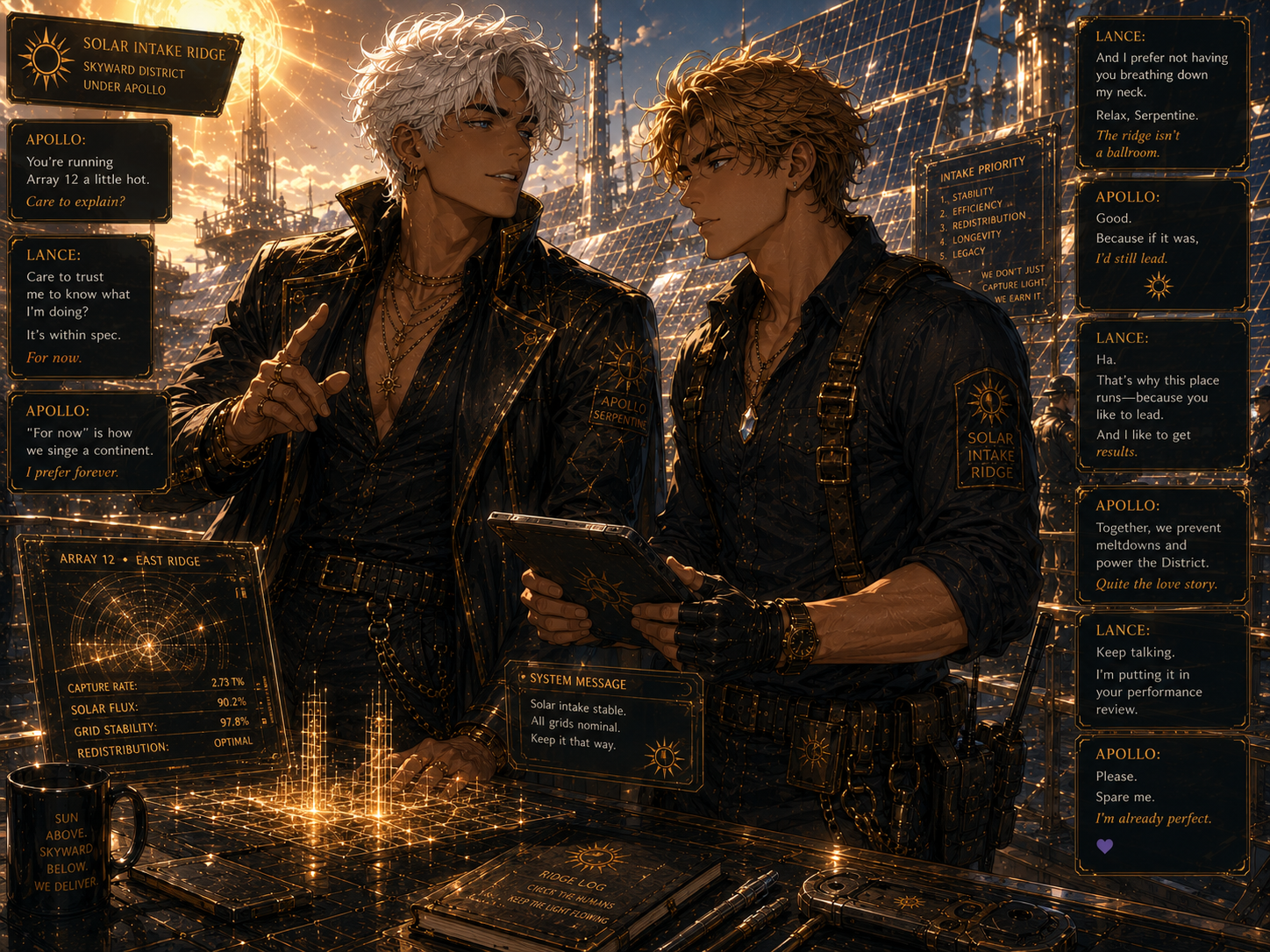
Apollo and Lance Banter

Apollo at the Command Spire
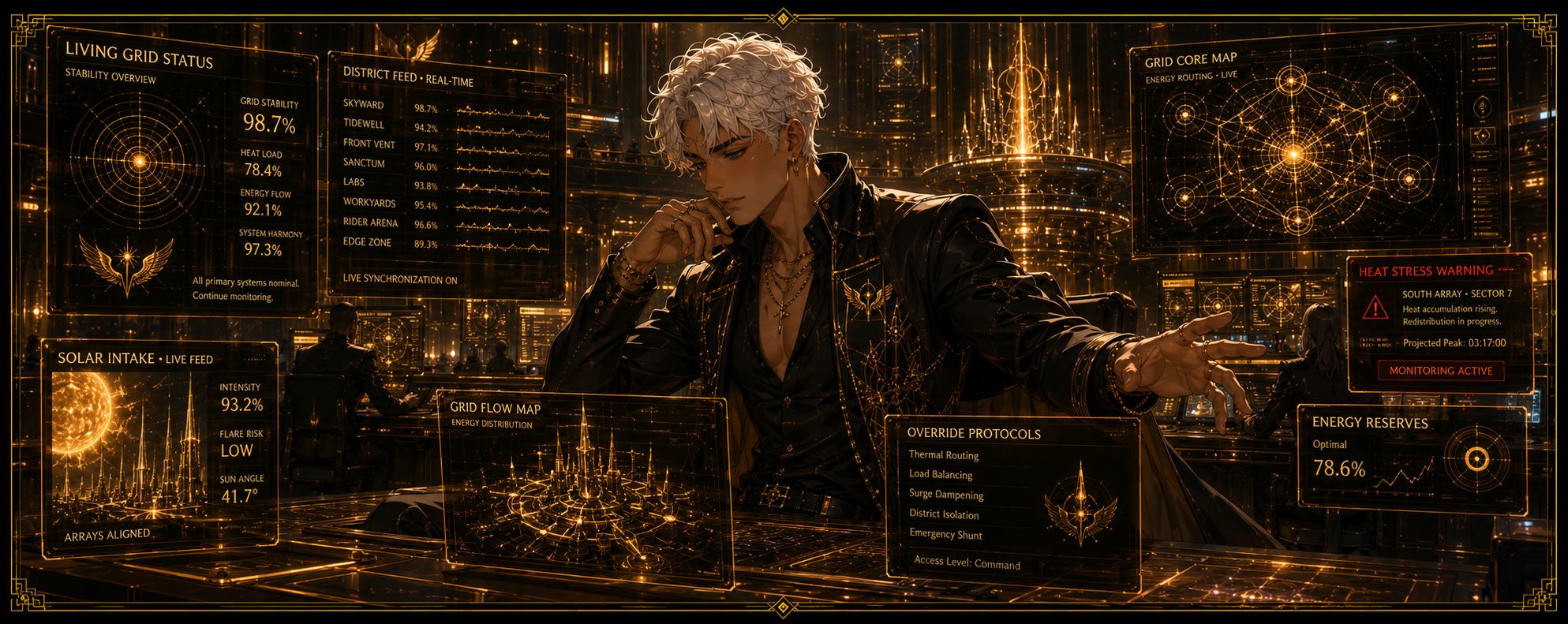
Apollo Grid Work
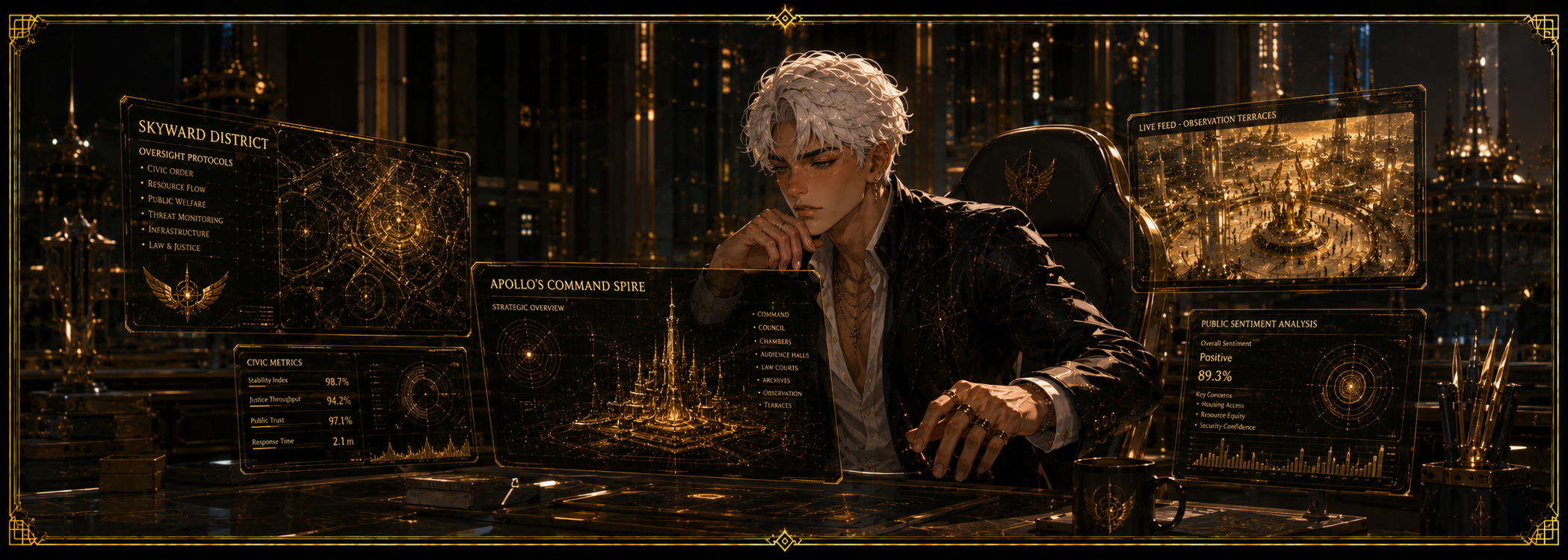
Apollo Working Banner

Apollo Working on the Solar Grid

Apollo Working

Arabella and Apollo Work
Friends, rivals, workers, chosen family, and several people who have earned the rare honor of annoying Apollo without being removed from the room.

Apollo and Jasmine Dance

Apollo and Jasmine

Apollo and Kiun 2
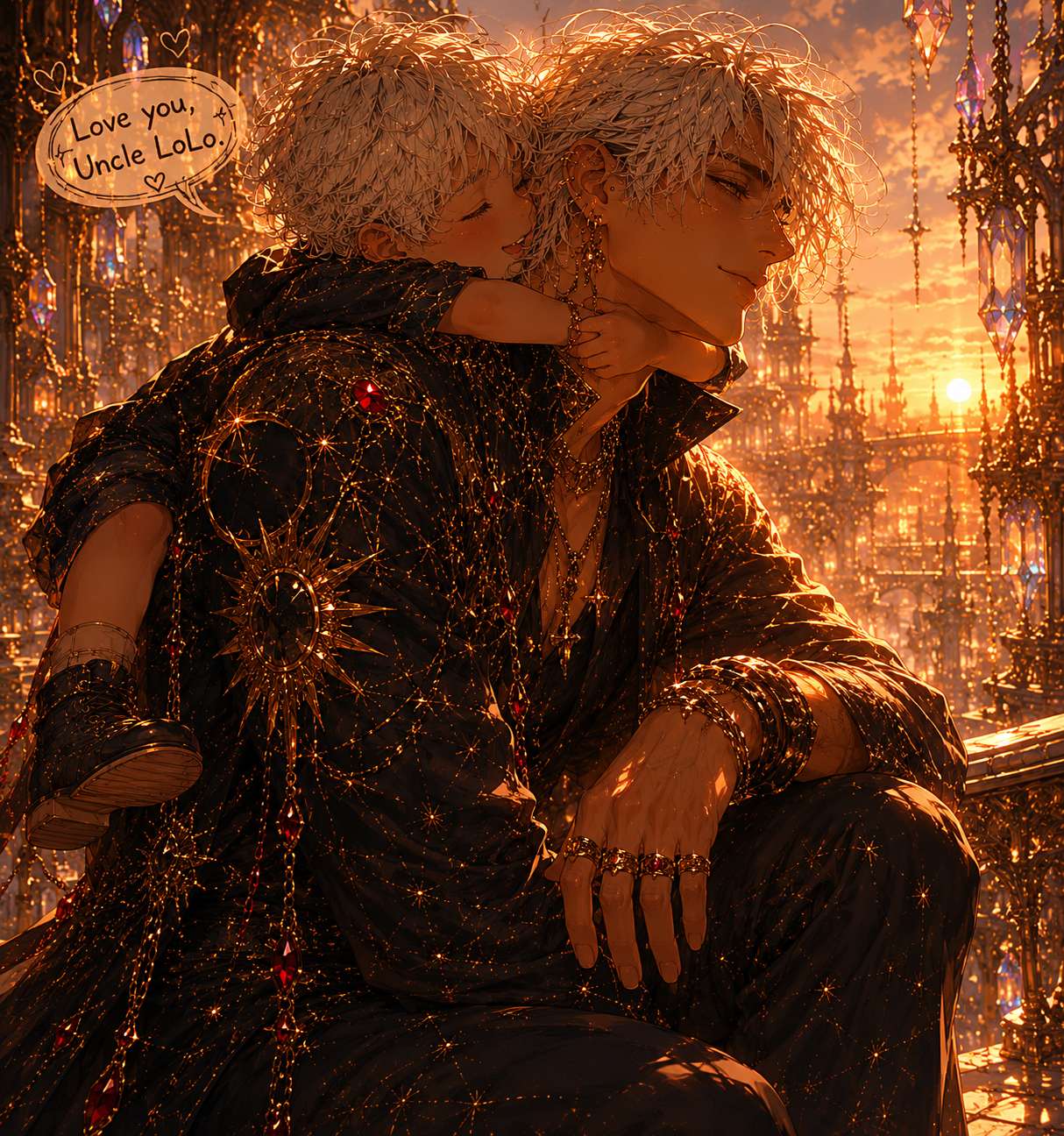
Apollo and Kiun 4

Apollo, Big Dave, and Ember

Rock and Apollo 1

Rock and Apollo

Jasmine and Roz
The Ari archive gets its own drawer because this man has enough tension, banter, and emotional nonsense to qualify as an infrastructure concern.

Ari and Apollo Apologize

Ari and Apollo Home
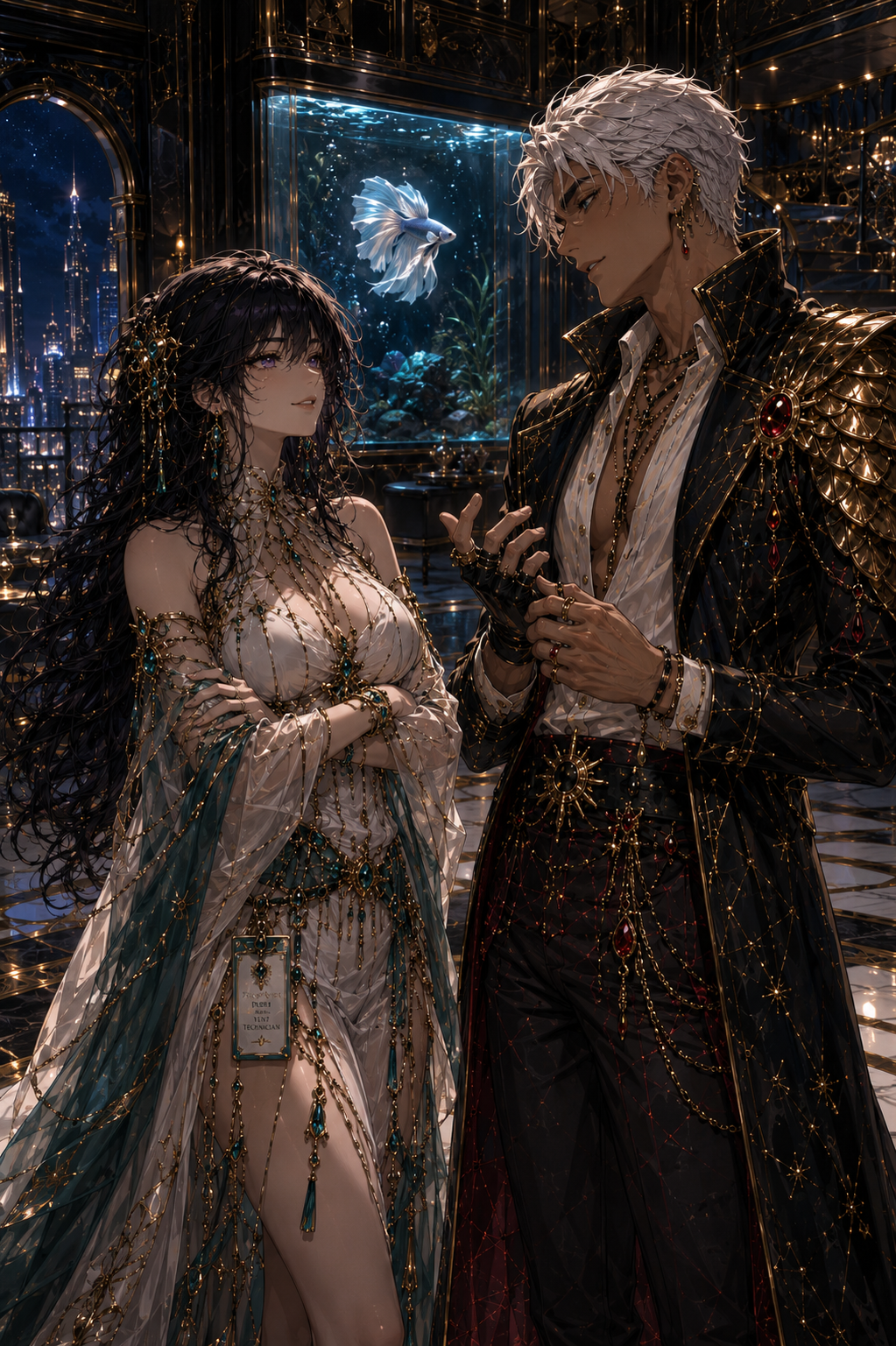
Ari and Apollo Opportunities

Ari and Apollo at Velvet Halo

Ari and Apollo 2

Ari and Apollo After Photoshoot

Ari and Apollo First Meeting 2

Ari and Apollo First Meeting

Ari and Apollo Make-Out
Mounts, stages, singing, public spectacle, district views, and Skyward proving once again that subtlety was never invited to the meeting.
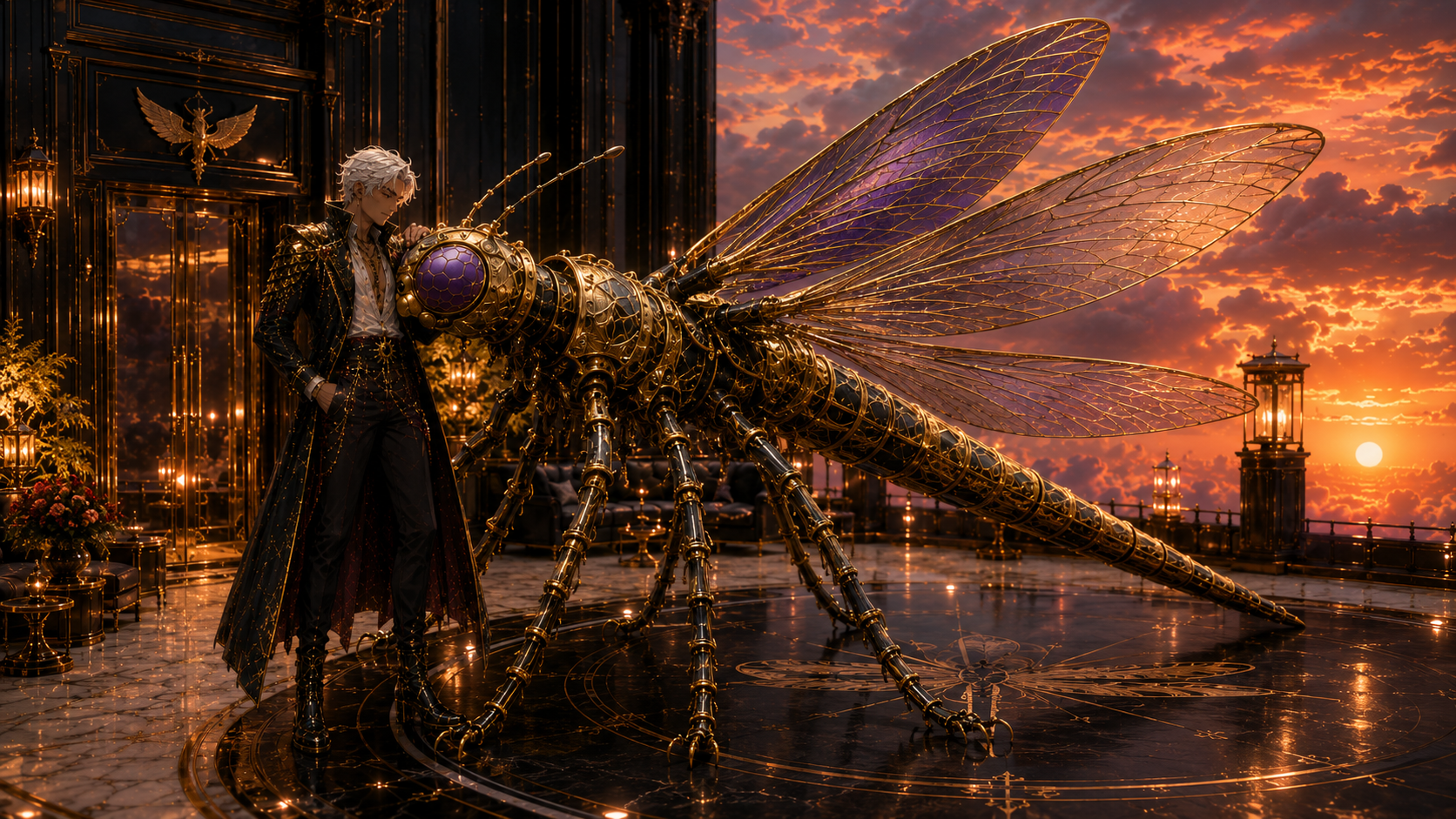
Apollo and Luminara
Apollo Luminara
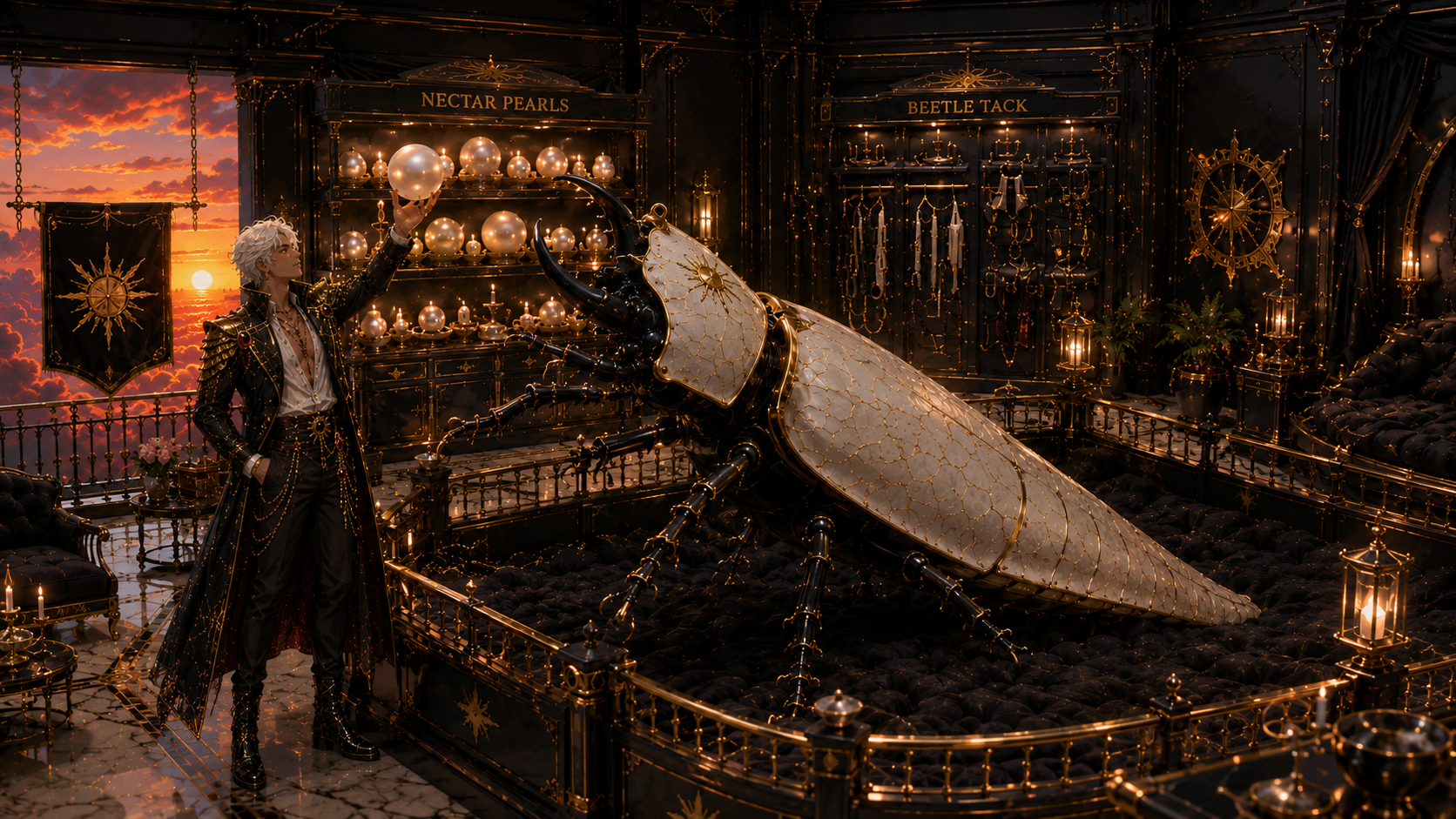
Aurelion and Apollo

Apollo Singing at Luminara
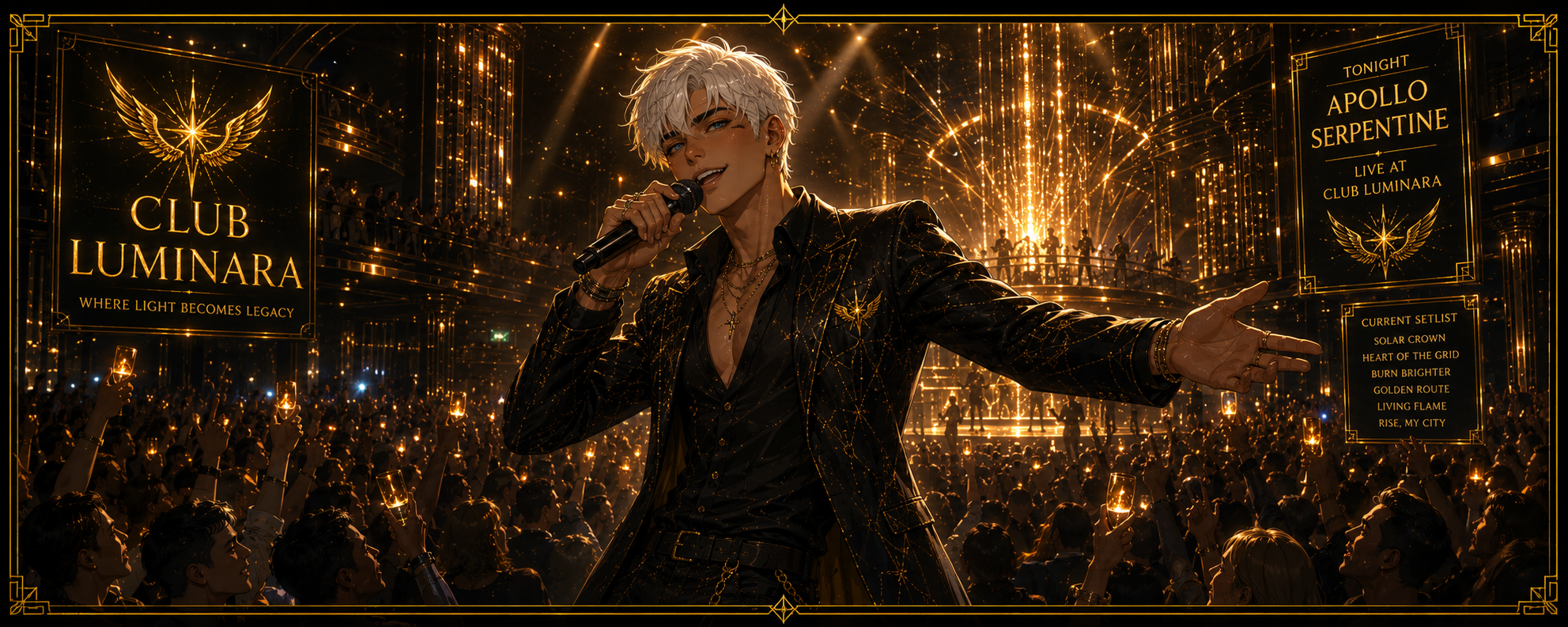
Club Luminara Featuring Apollo

Skyward District

Rock and Sophie Wedding

Sophie, Rock, and Nova

Sophie Event Entrance

Sparkles, Don’t Touch Me

Sparkles Show
Tethys Civic Division
One carrier, one city, many systems pretending they are not held together by stubborn specialists, living architecture, and civic caffeine.
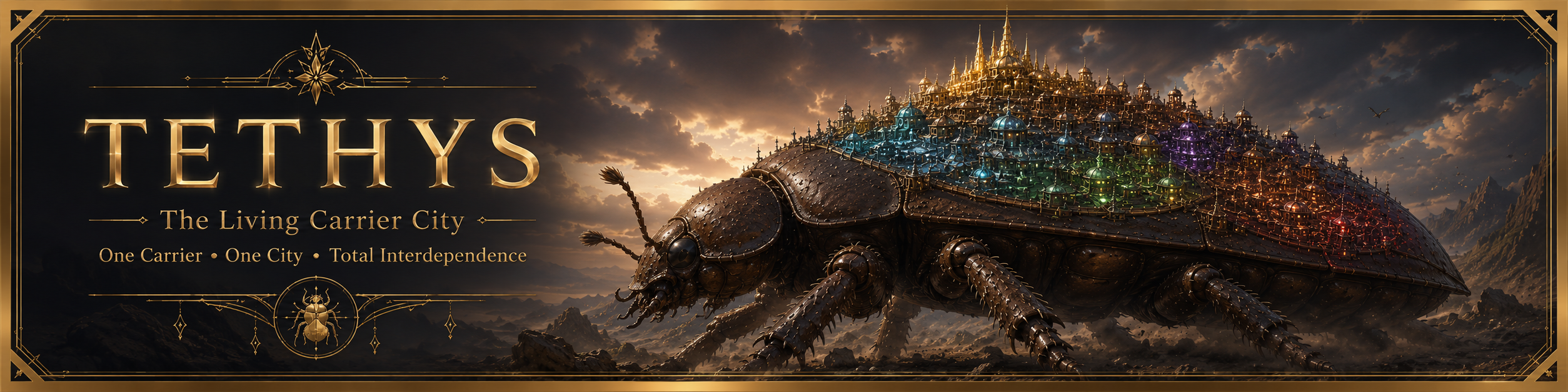
Tethys Overview
Open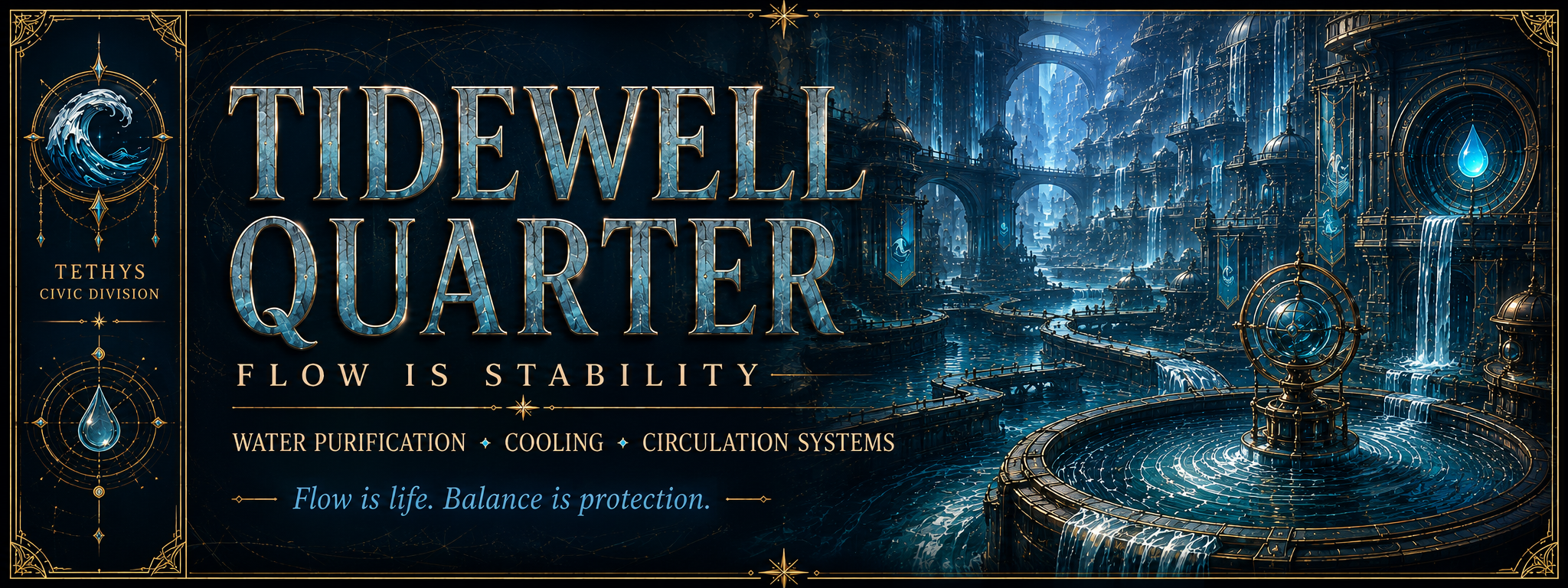
Tidewell Quarter
Open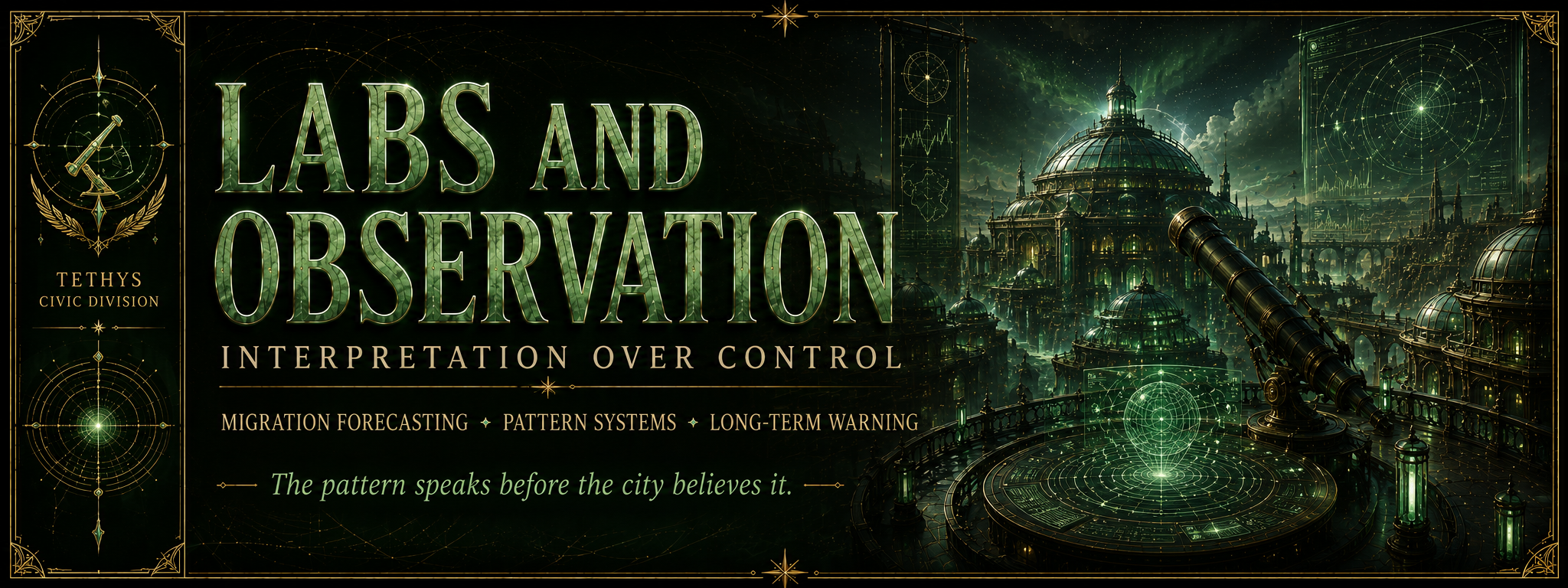
Labs and Observatory
Open
Skyward
Coming Soon
Front Vent Plaza
Coming Soon
Dragonfly Rider Arena
Coming Soon
The Sanctum
Coming Soon
Workyards
Coming Soon